Mogollon, New Mexico
August 29-31, 2016
Between the illness and eventual loss of a beloved pet, and the prolonged heat and drought, we stayed close to home this summer, enjoying the special places that convinced us to move to Silver City in the first place. When fires quashed a planned trip up north to celebrate our 20th anniversary, we redirected to Mogollon, New Mexico, a place we've visited many times, but never taken the time to truly explore.
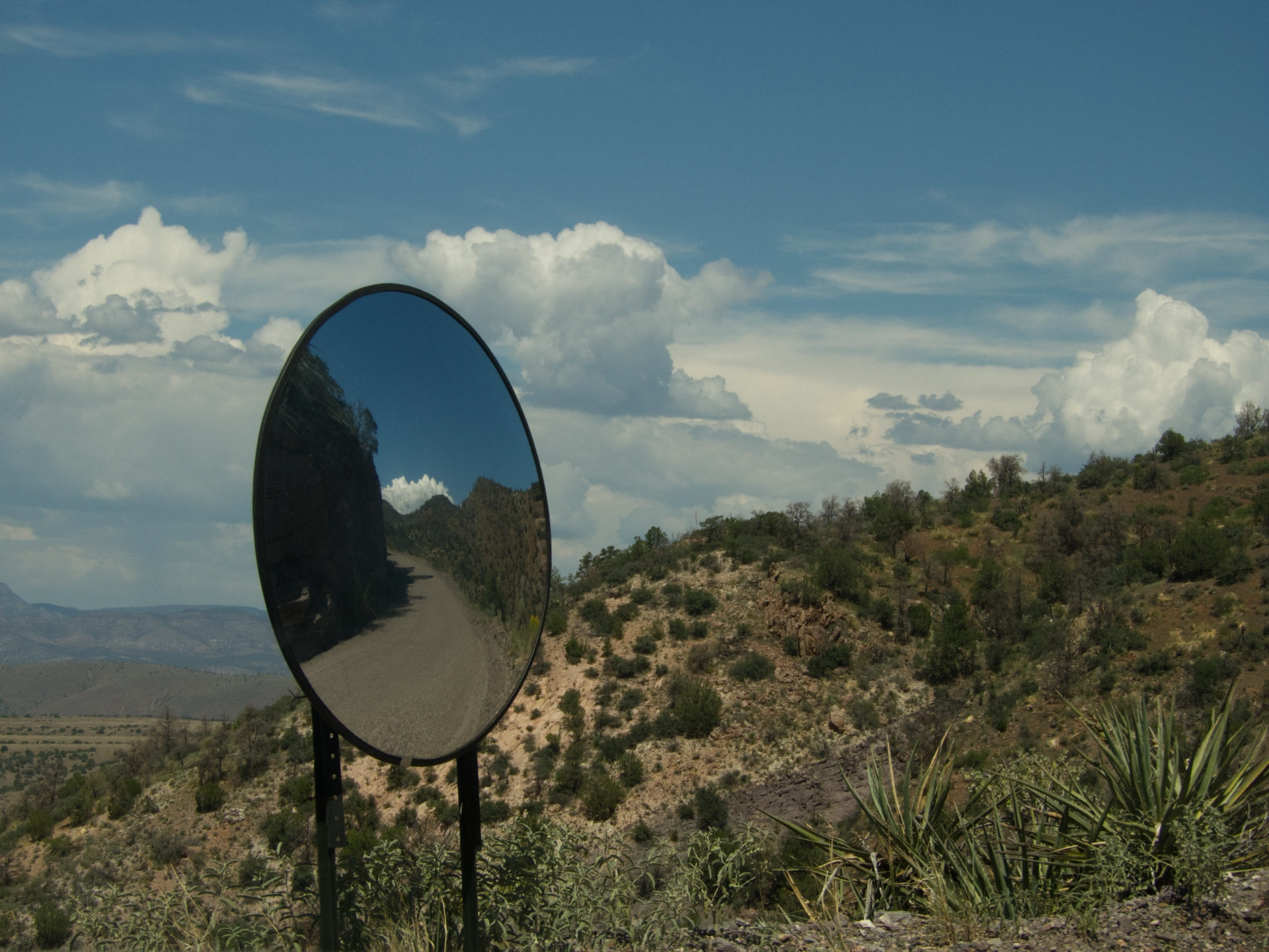
Of course you can't write about Mogollon without describing the road. Bursum Road NM 159 climbs 2100' in eight miles, and is a curvy, one-lane frayed-at-the-edges ribbon with no guardrails. I first drove this road 24 years ago, Thanksgiving weekend, in my rusty trusty 1980 Dodge van. I cannot imagine how I drove that road, in that vehicle, in the middle of winter! When I arrived, I found the town completely deserted and blanketed with fresh snow.
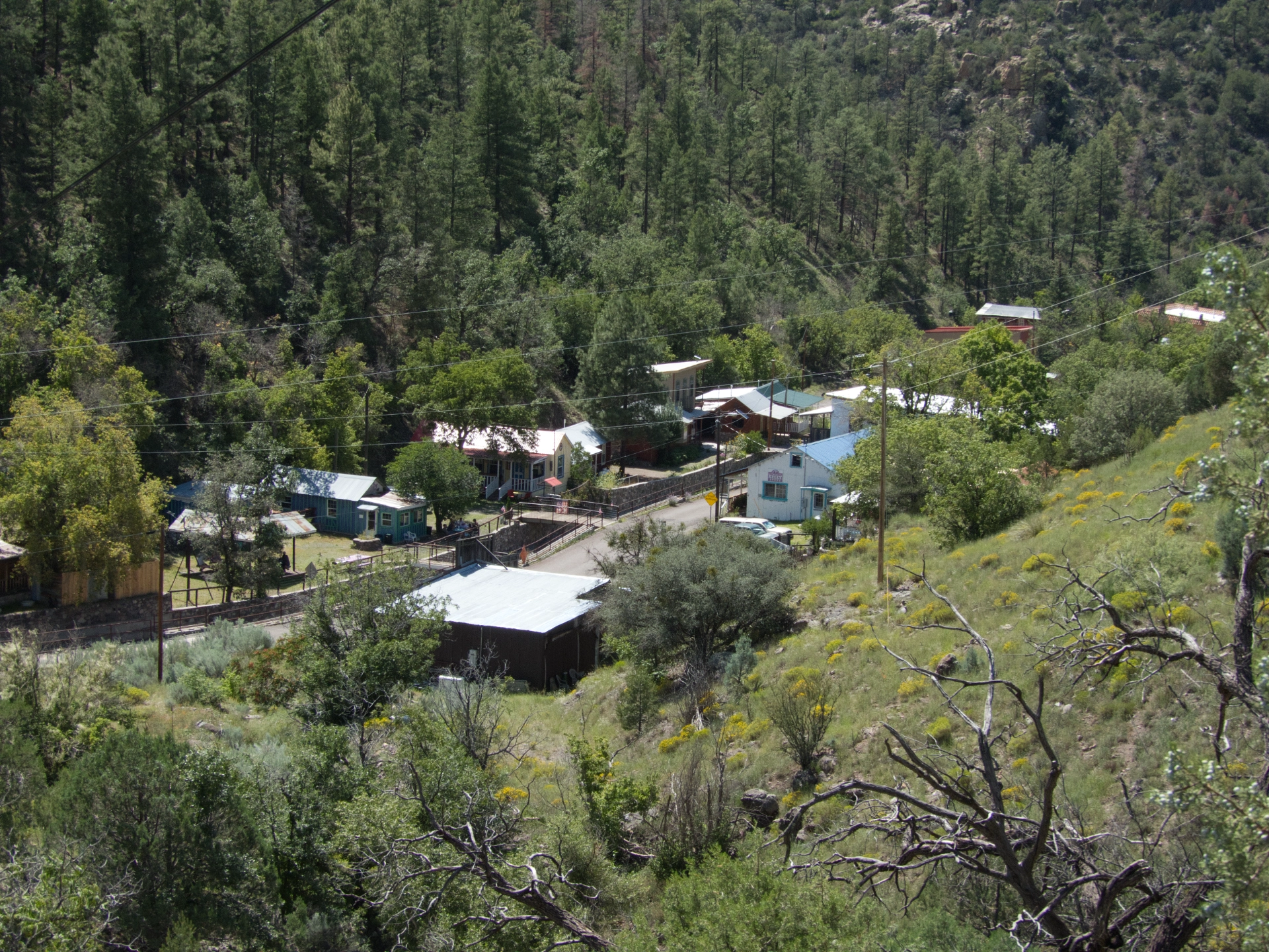
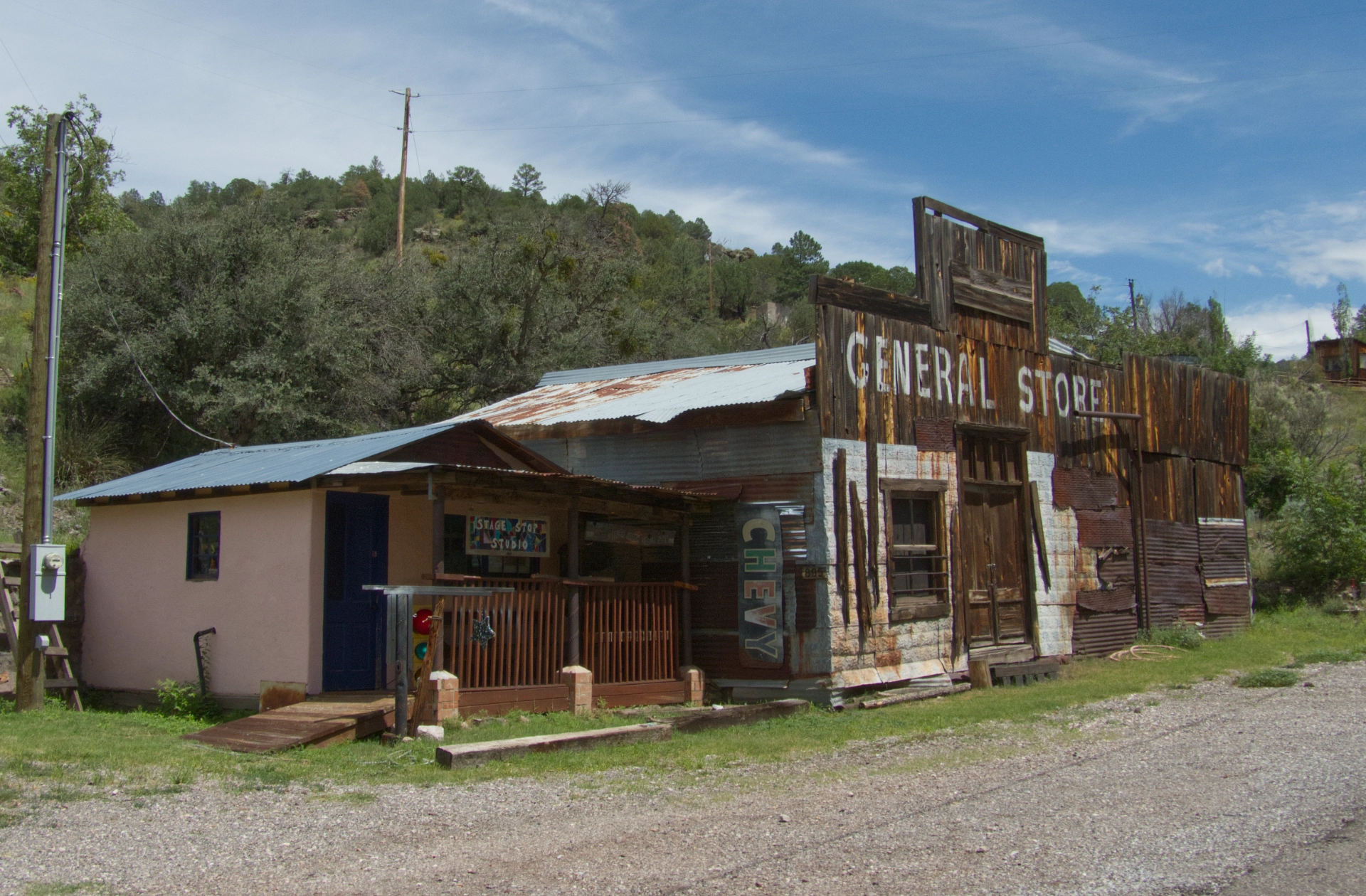
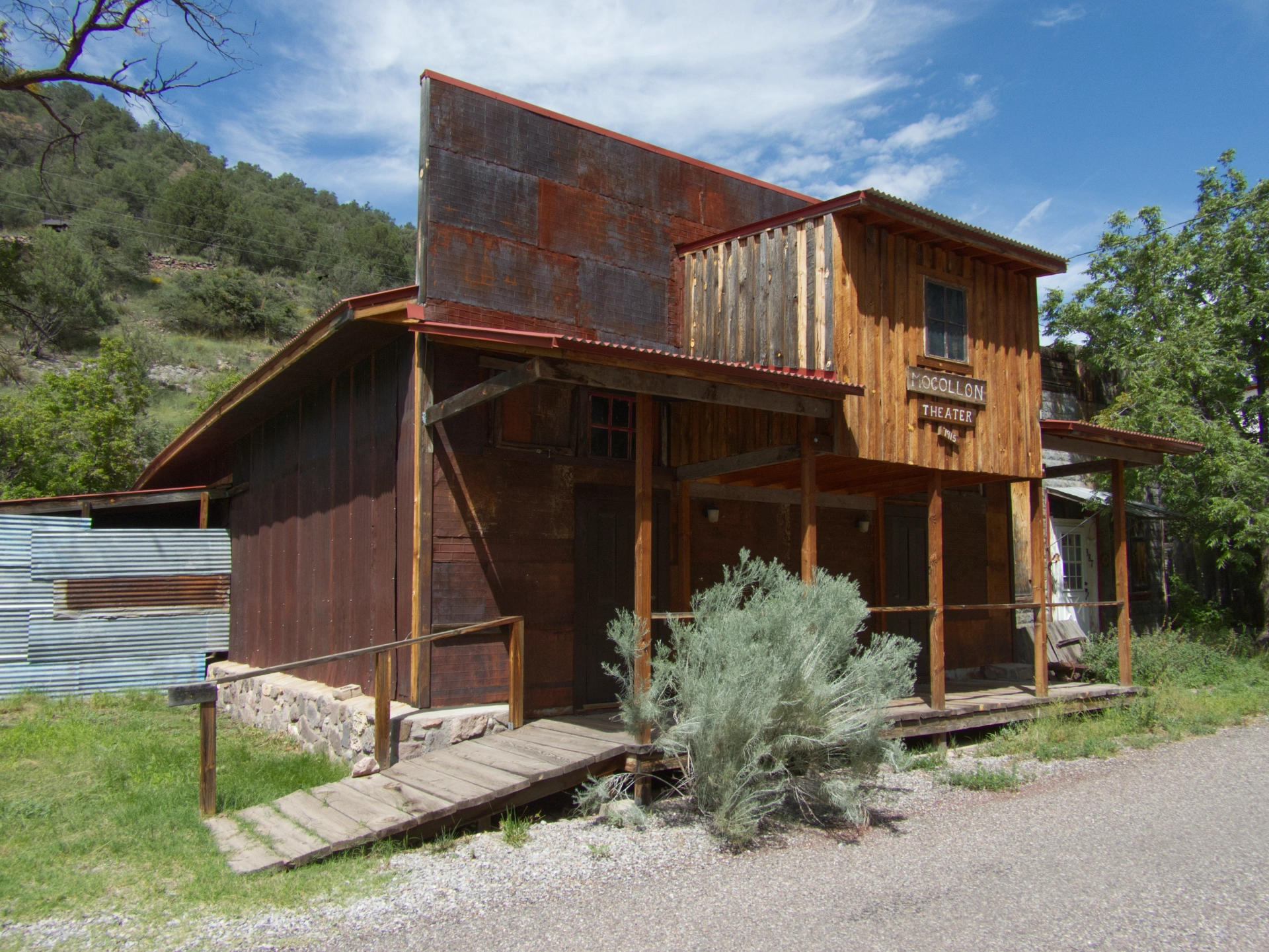
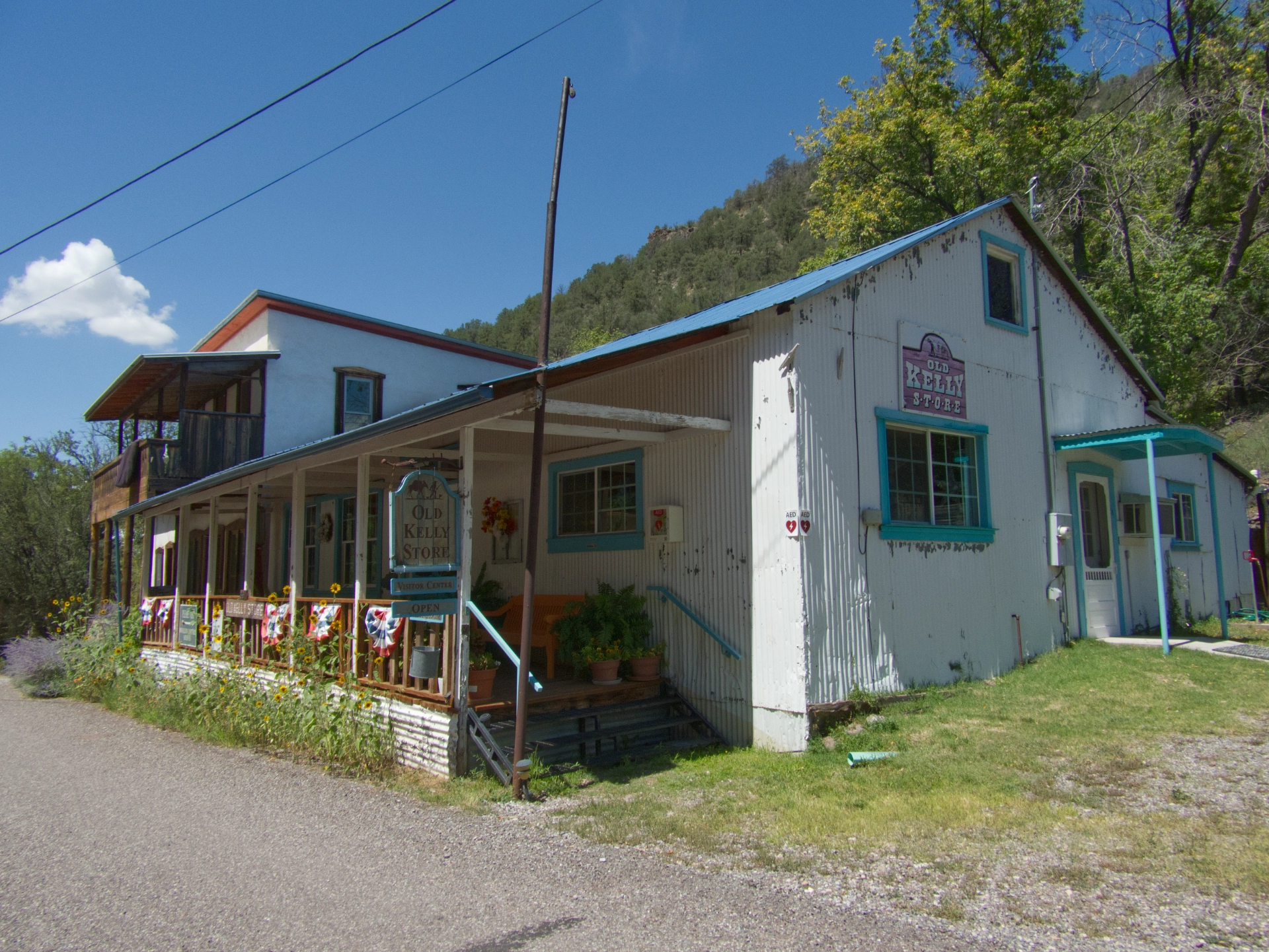
Mogollon has a population of just nine full-time residents, so the museum, the famous Purple Onion and a couple of shops only welcome visitors on weekends from May to October.
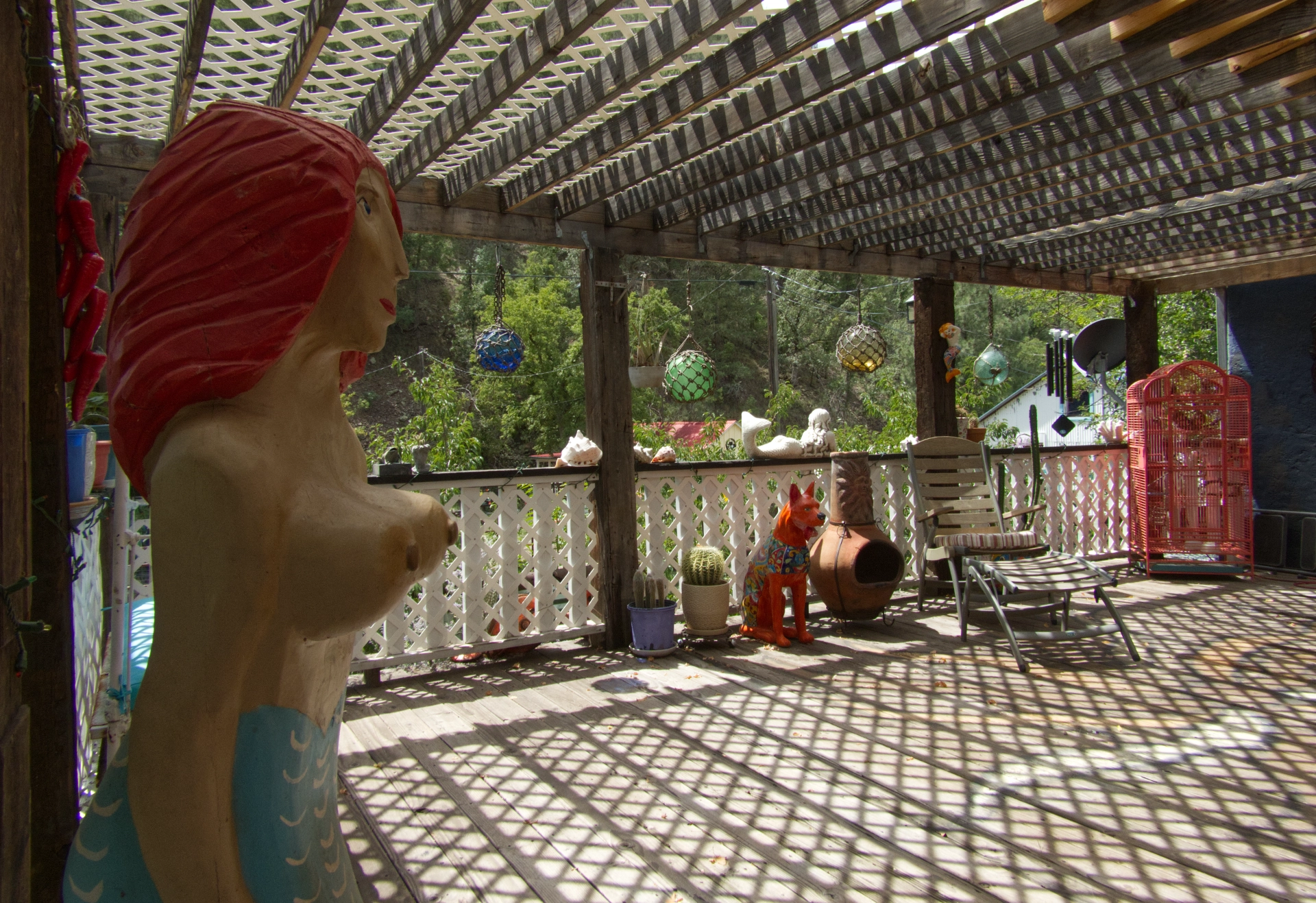
The Blue House, our home for the weekend, was an absolute delight! A former hospital, with typical mining town construction, including several additions with mismatched floor heights, and an interior decorated with original artwork and colorful found objects, it felt a lot like home! The house has a huge wraparound porch that overlooks the entire town. We woke up to absolute silence — no traffic noise no weed whackers no thump-thump-thump from cars with over-amped sound systems no big trucks farting their way up and down route 180 — nothing but birdsong and the pitter-patter of rain on the tin roof. It reminded me how an unreasonably noisy Silver City is for a town of its size.
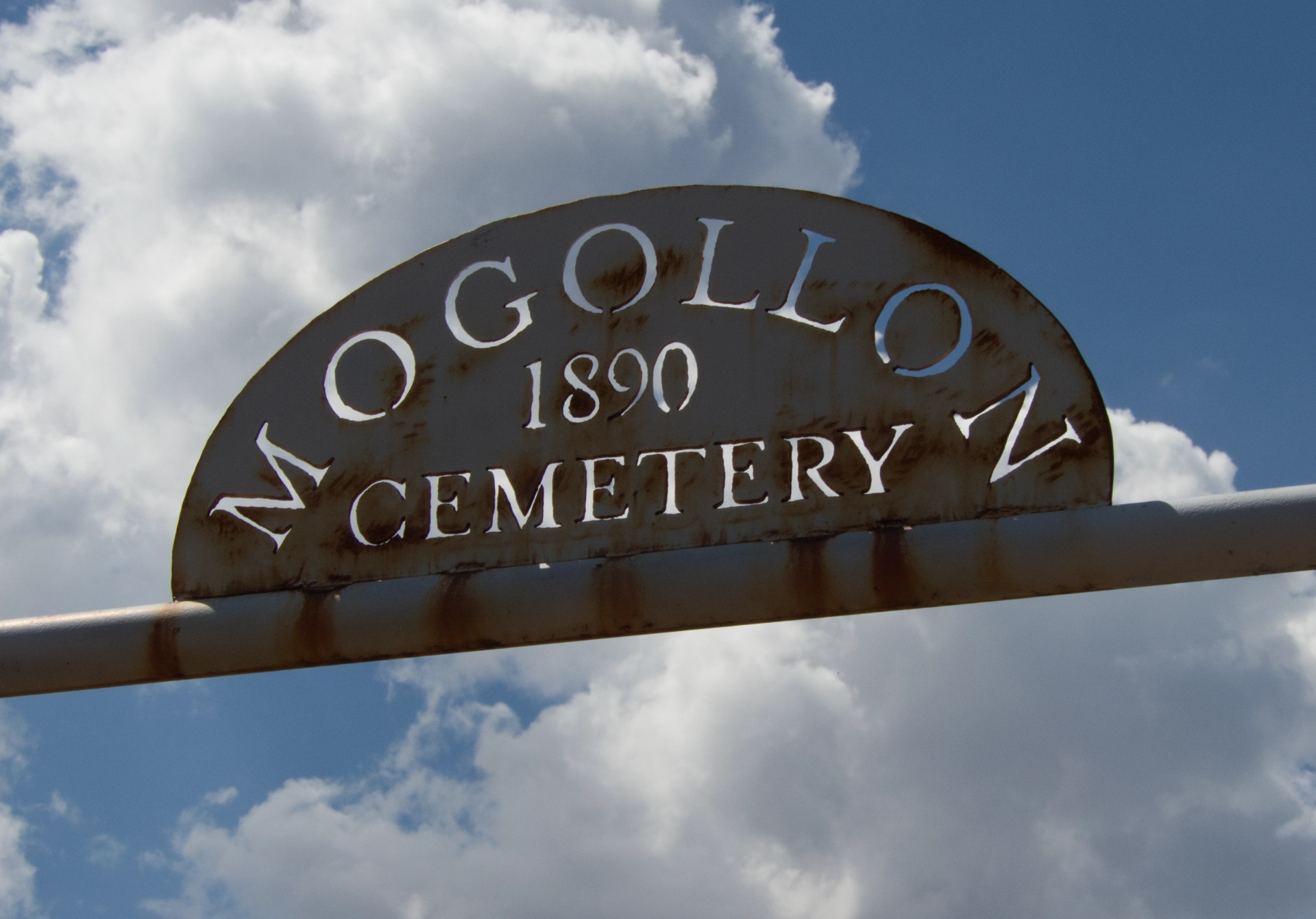
We headed straight for the cemetery, which left a strong impression on a previous trip. The cemetery was every bit as interesting as we recalled. The setting is spectacular, at the top of a ridge overlooking the town. Unsurprisingly, the cemetery was divided into Anglo and Hispanic sections, and of course this Hispanic section was more interesting! We spent an hour or more wandering among the headstones.
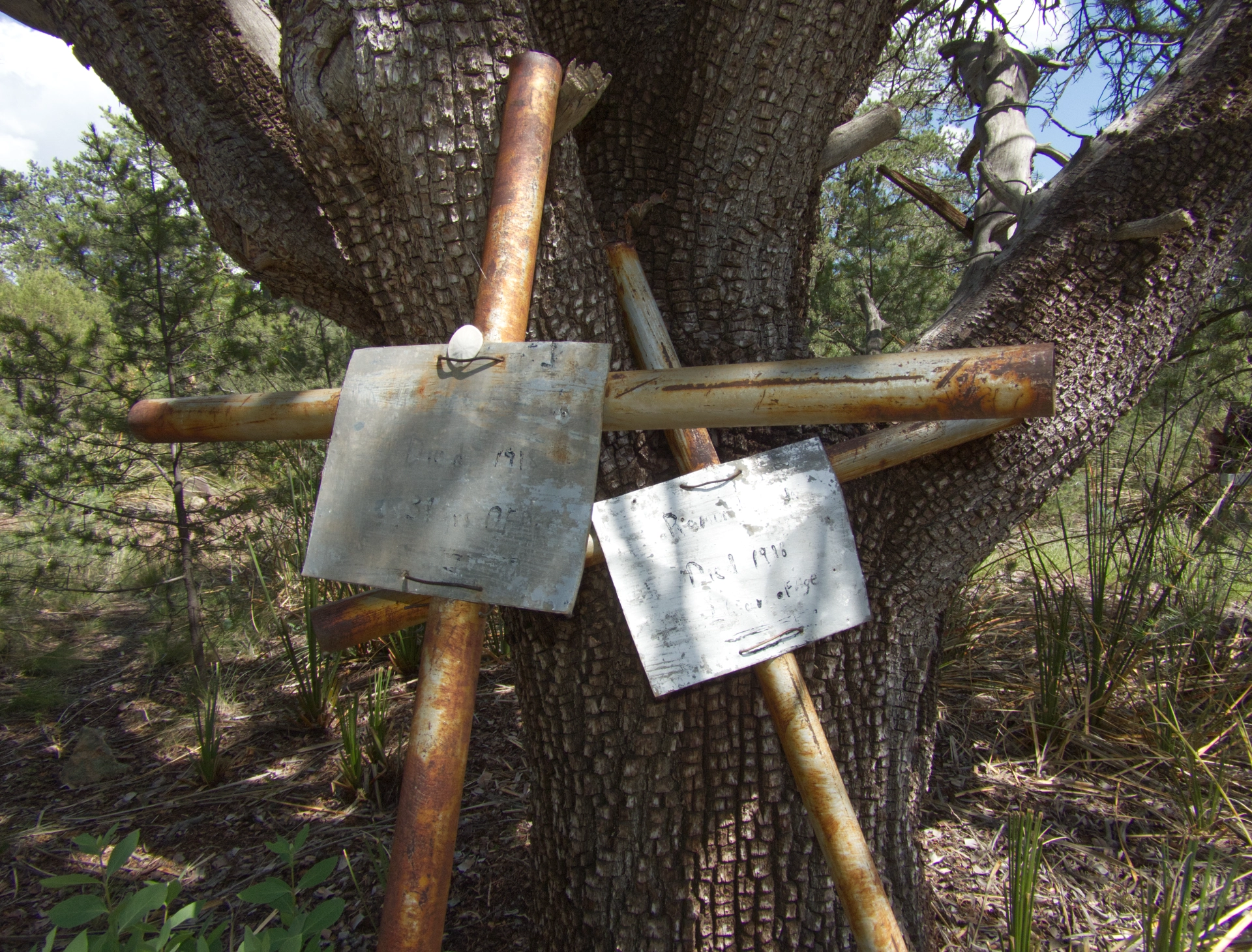
Some markers are as simple as steel pipes wired with tin plates.
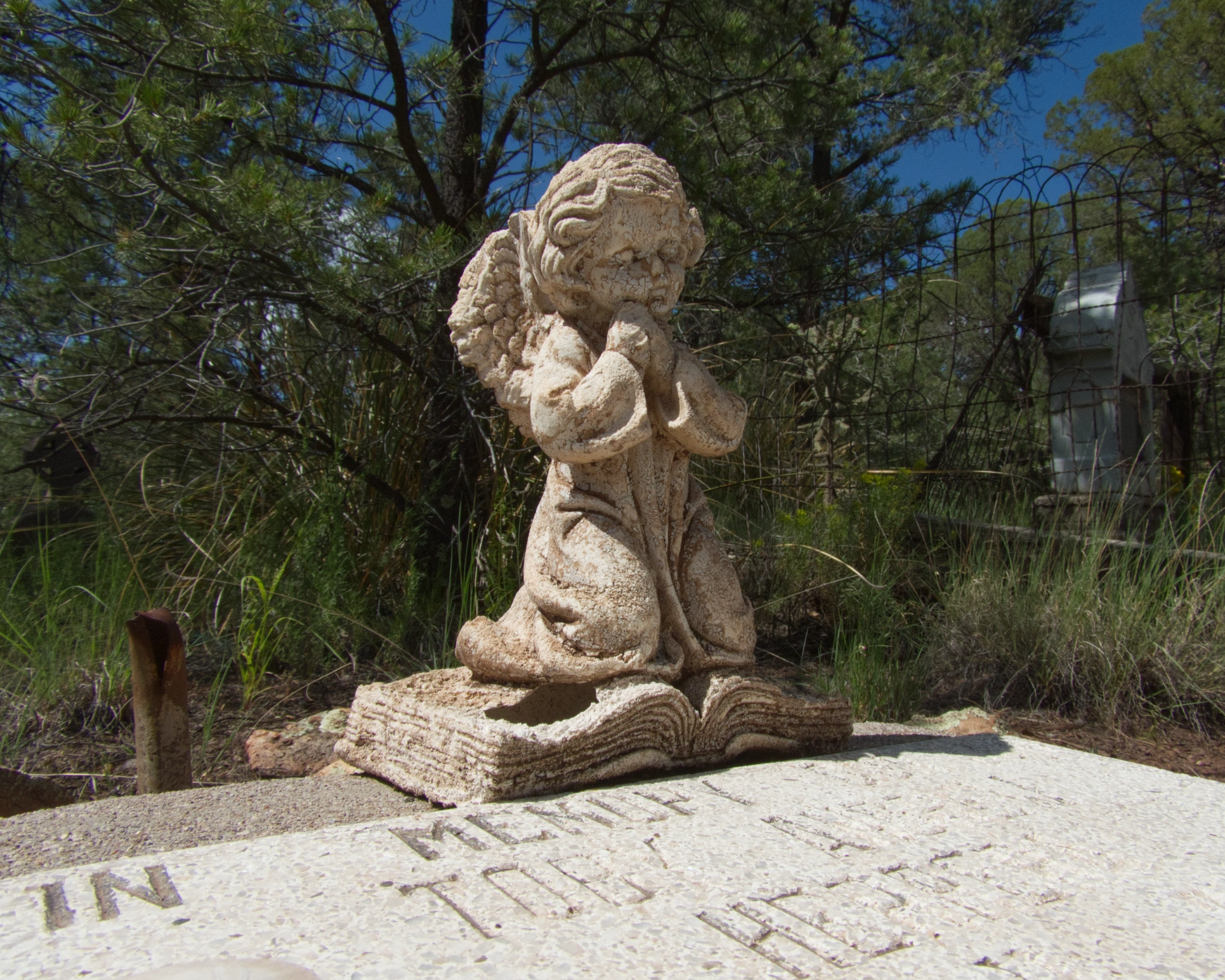
Once again, we were shocked by the number of children, and by how many people died in 1918, likely from the Spanish flu. According to an interpretive sign near the entrance, the flu took the lives of 52 townspeople.
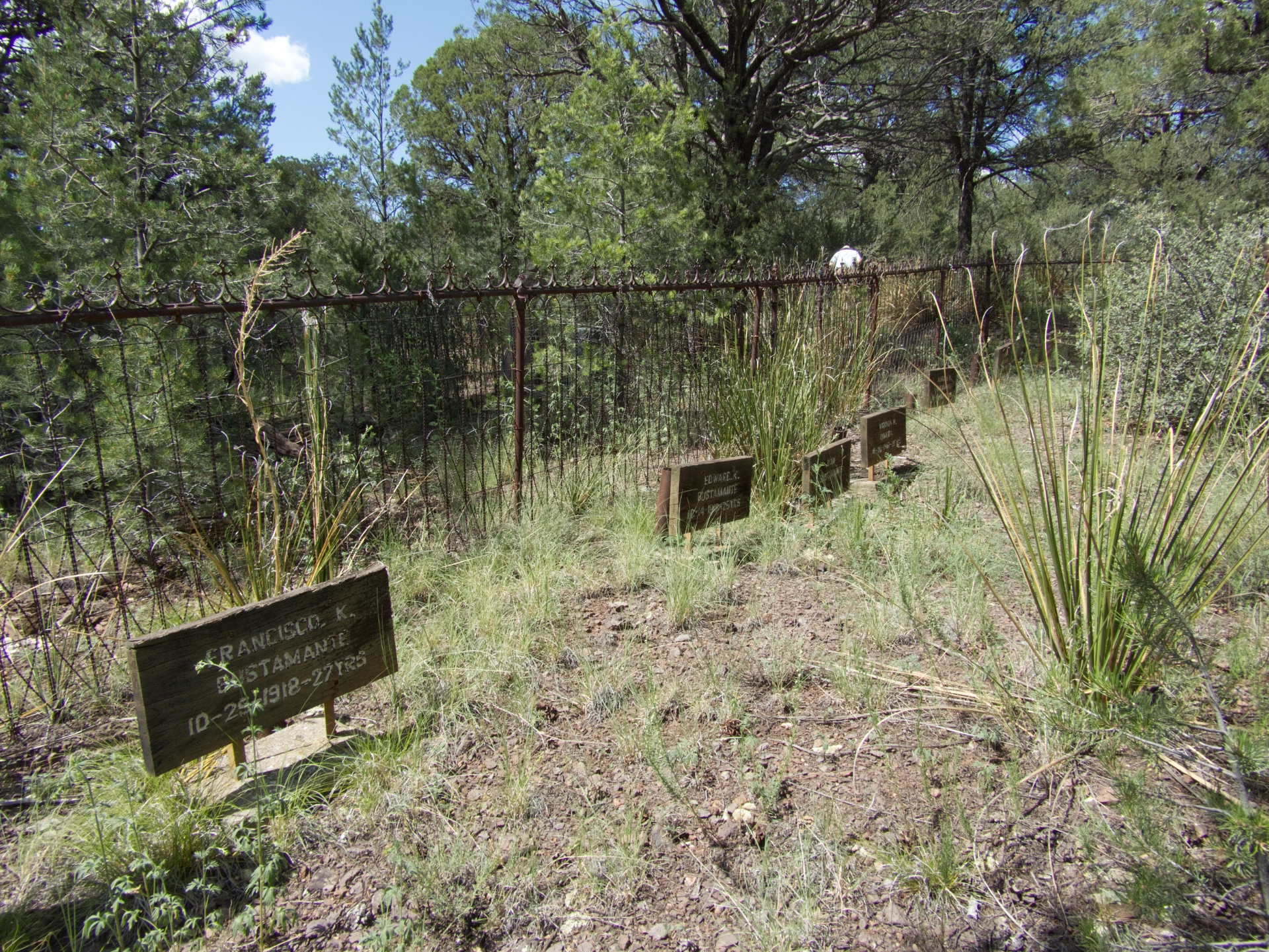
We saw a whole row of wooden markers for people lost to the 1918 pandemic.
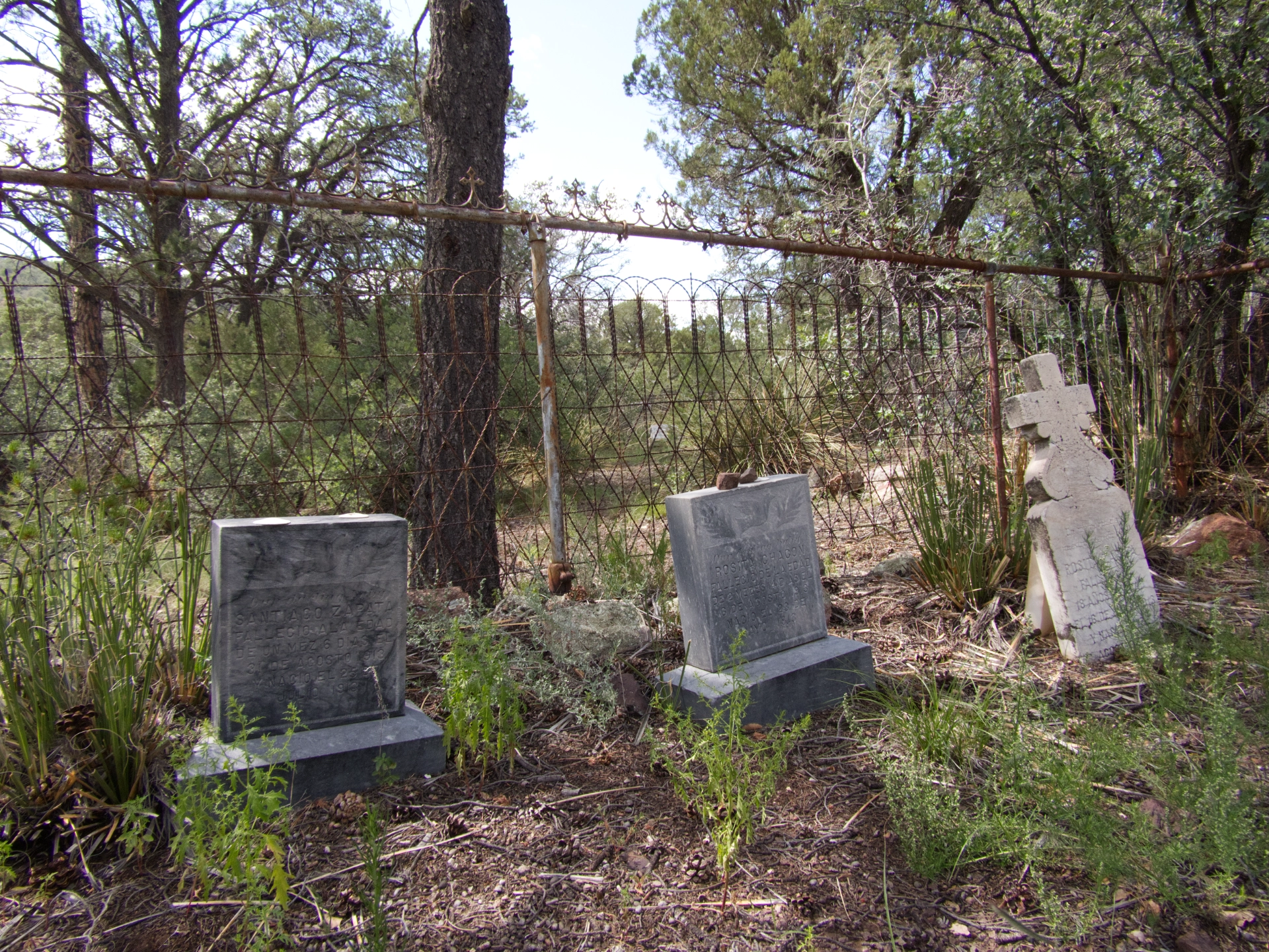
One family lost three children, ages 1, 3 and 18, within the space of a few months. Even people who survived to adulthood usually perished in their 40s and 50s. There were only a few graves of people who lived into their 60s or 70s.
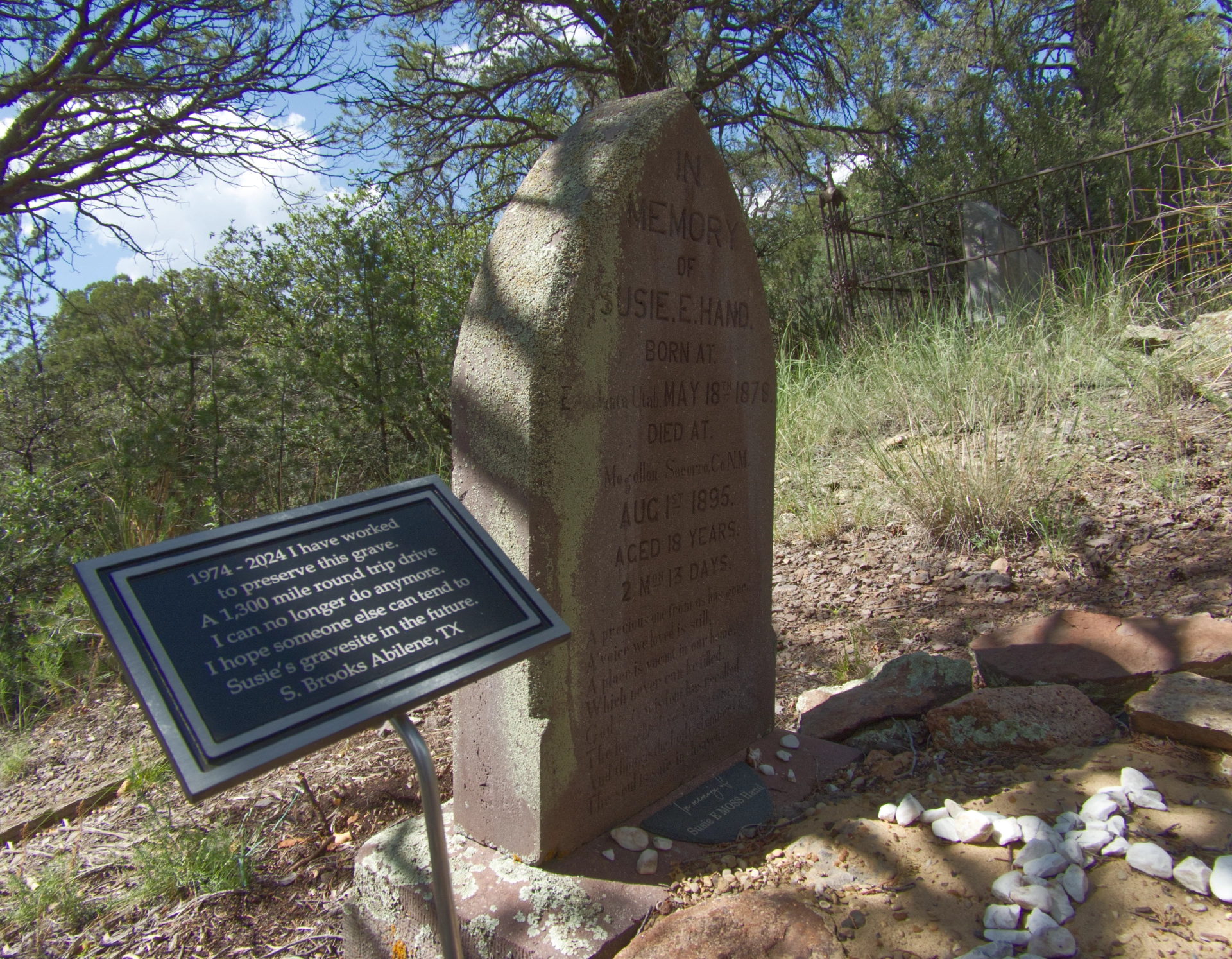
But what touched me the most was a metal sign near the grave of Susie Hand, who died in 1895 at 18 years of age. The author said he had tended her grave for 50 years, but wouldn't be able to continue to do so, and he hoped someone else would assume responsibility. A bit of internet sleuthing turned up a fascinating story. His name was Elroy S. Brooks, and in 1974 he visited Mogollon, having just returned from a tour of duty in Vietnam. Something about Susie's death at around his age, and the inscription on her headstone deeply affected him.
When I stumbled upon this grave for the first time in 1974, I wasn't too much older than Susie E. Hand. I had just done two tours of duty in Vietnam and felt lucky to be alive as a 22-year-old just having received my discharge from the Army. After reading the inscription on Susie's headstone, I was overcome by profound sadness for this young lady and it was obvious her family cherished their child... Each trip to my favorite spot in New Mexico (Mogollon, the "Ghost Town") I tend to Susie E. Hand's grave site because she has no relatives in the area, and the grave is usually unkempt each time I visit... Last time I was there, pine trees had nearly overtaken her grave. I cleared the grave site and hauled in fresh stones from outside the cemetery to dress up her final resting place... I am not related to the Hand family, I simply feel compassion for this young lady and her family who must have been passing through the region when Susie died... https://www.genealogy.com/forum/surnames/topics/hand/3134/
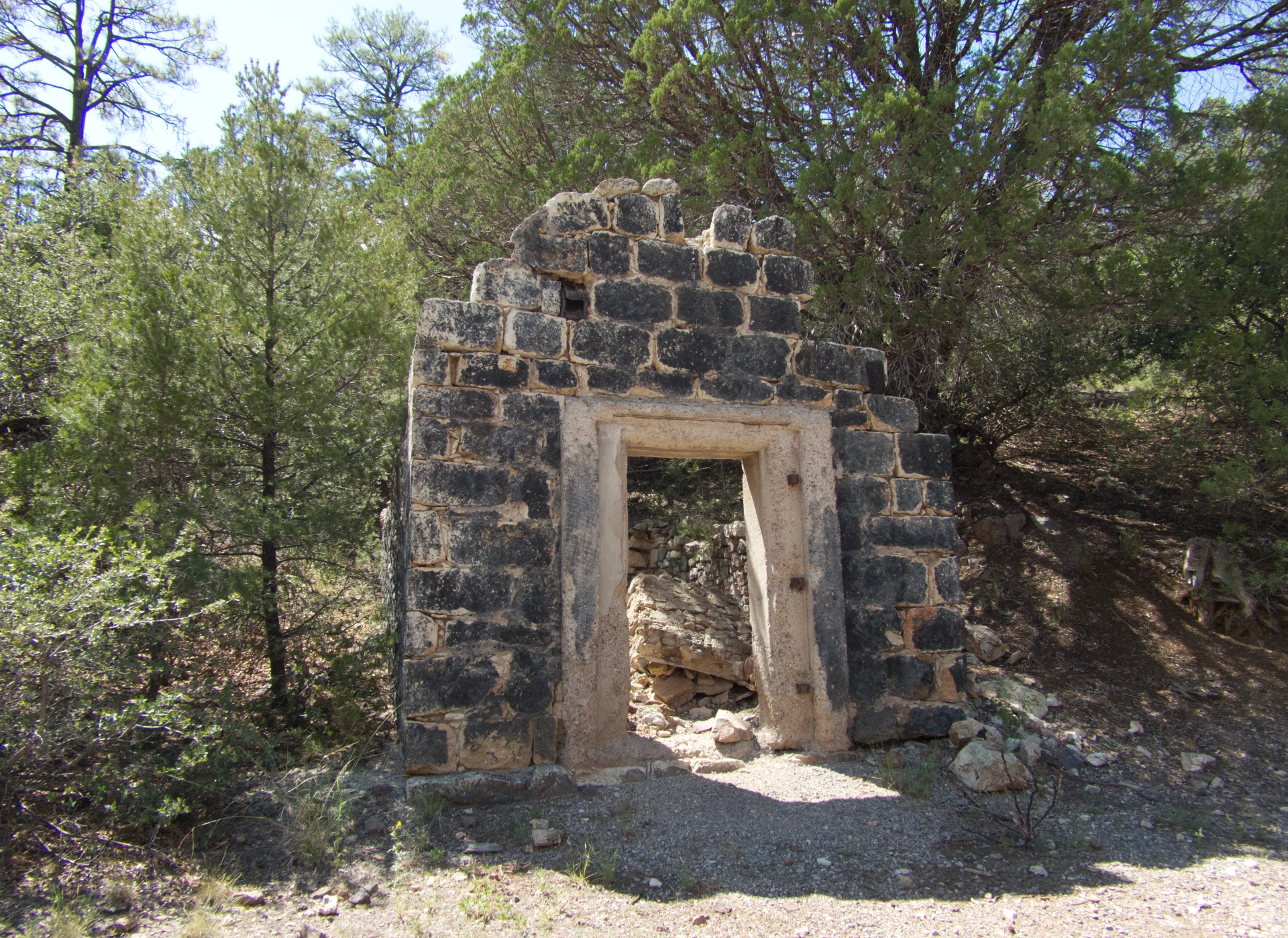
The cemetery is curiously — I hope not conveniently — located right next to the sprawling Fannie Hill Mine. We parked at the gate right next to the remains of what we correctly assumed was the powder house, a rather elegant stone structure with 18-inch thick walls, no roof, and hinges of what appeared to have been attached to a very substantial steel door.
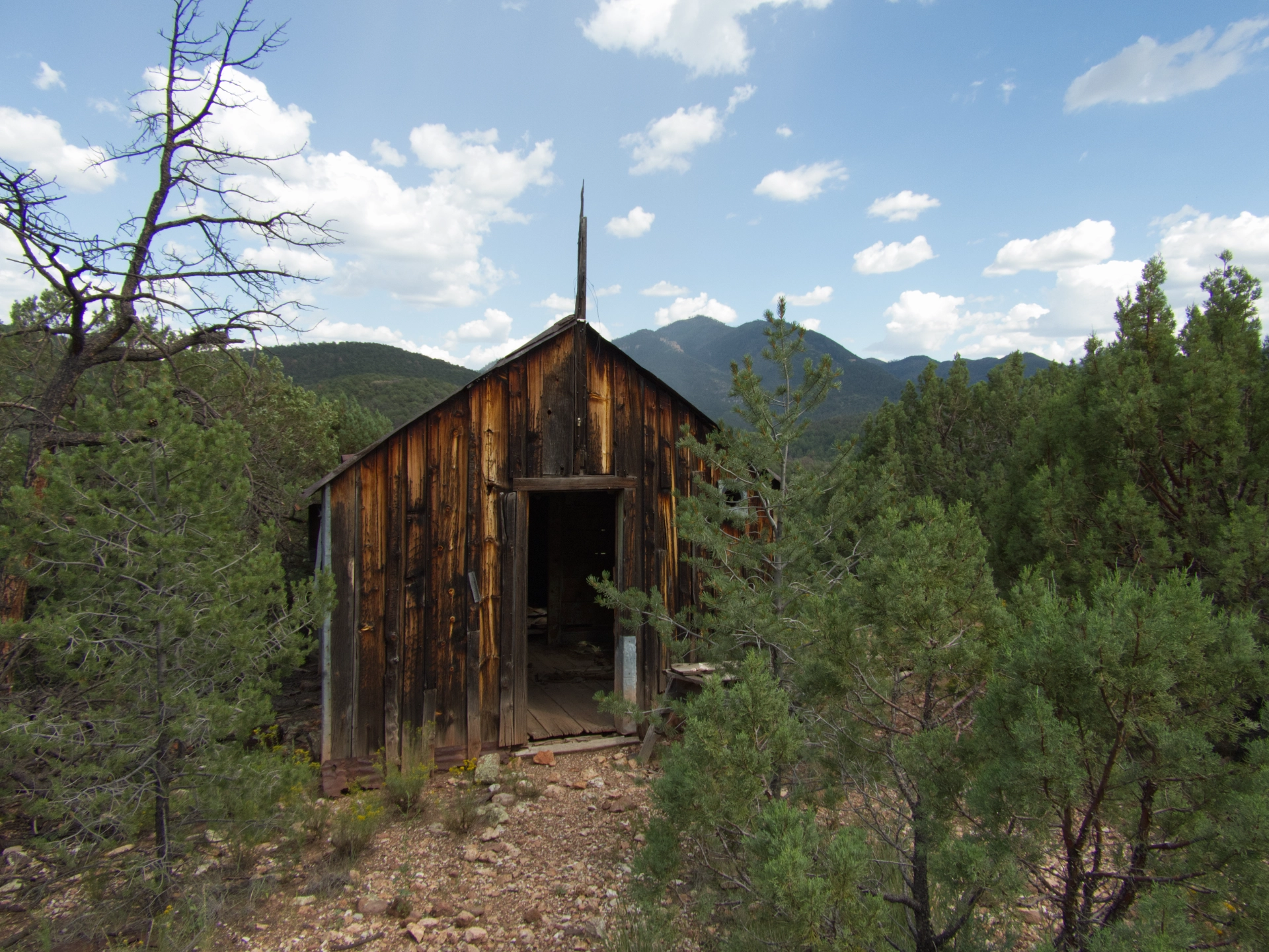
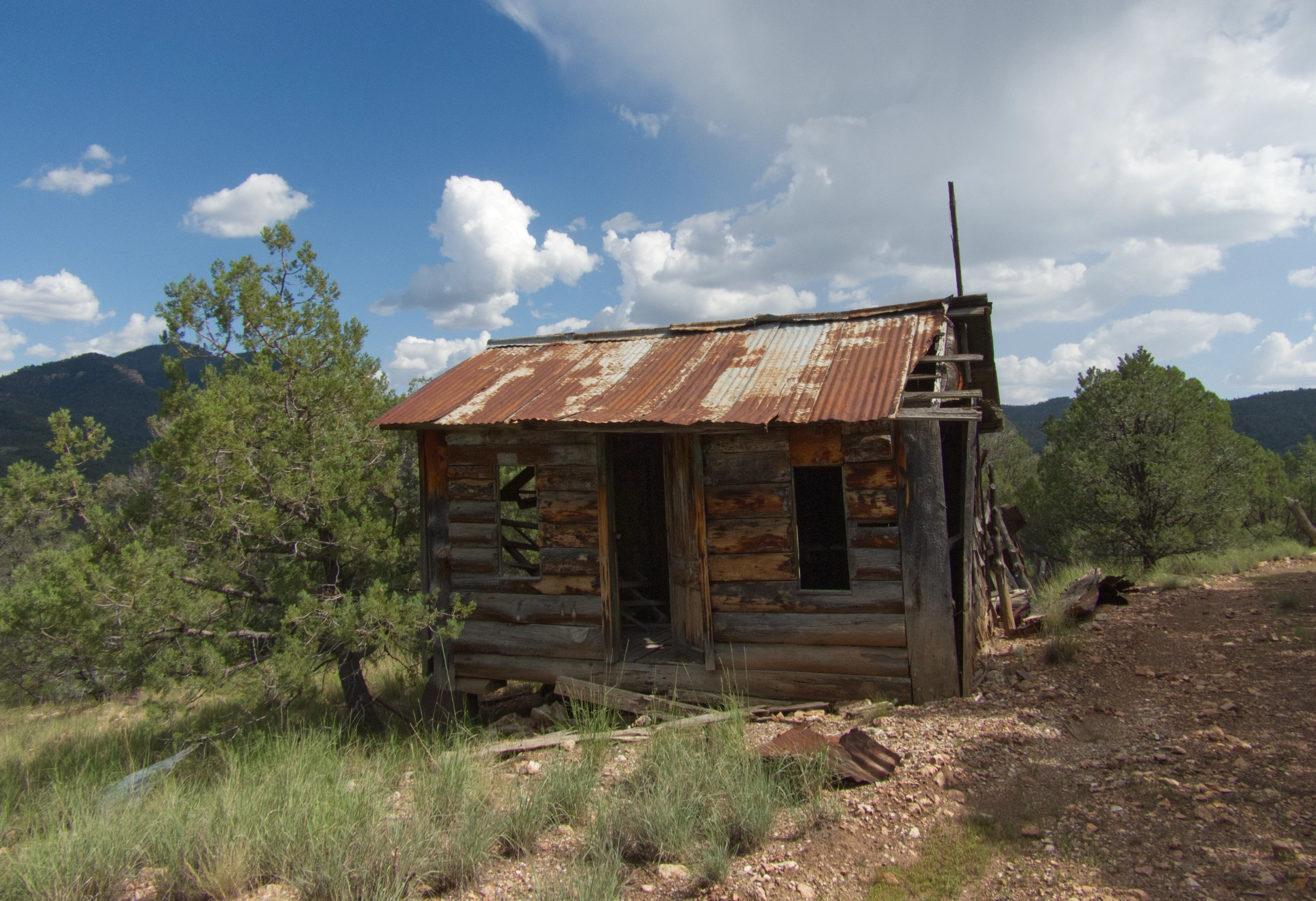
About a quarter mile up the road, we encountered the first of what would eventually be dozens of buildings, mostly board and batten construction, and often patched with rusty corrugated tin.
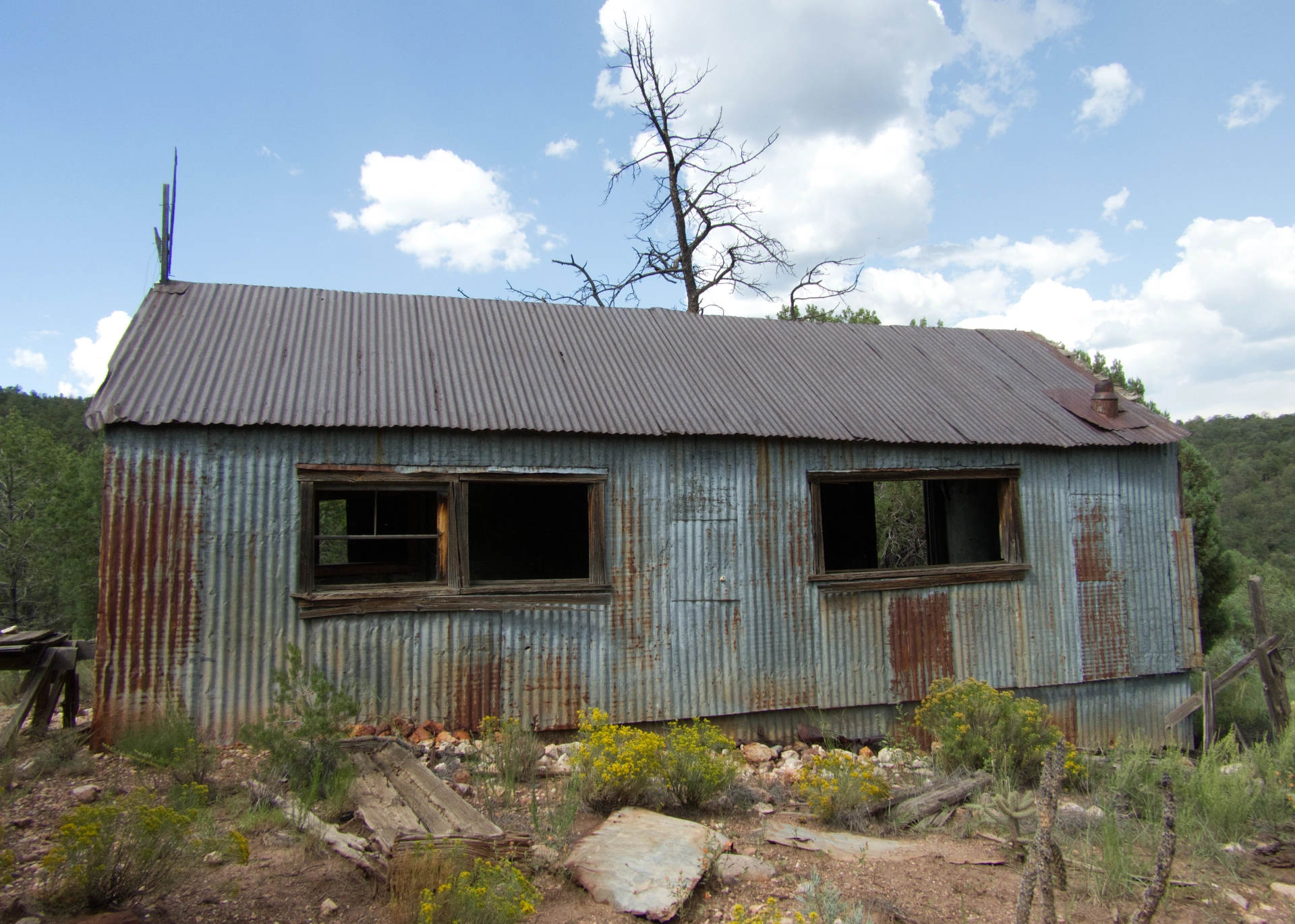
All were falling into their foundations, but still provided a sense of what this town, perched on a ridge at 7,200 feet in the middle of absolute nowhere, might have looked like. There were a number of private homes, but also a bunkhouse next to what might have been a mess hall or meeting room. One wall was completely blown away provided a thrilling view of close-in mountains.
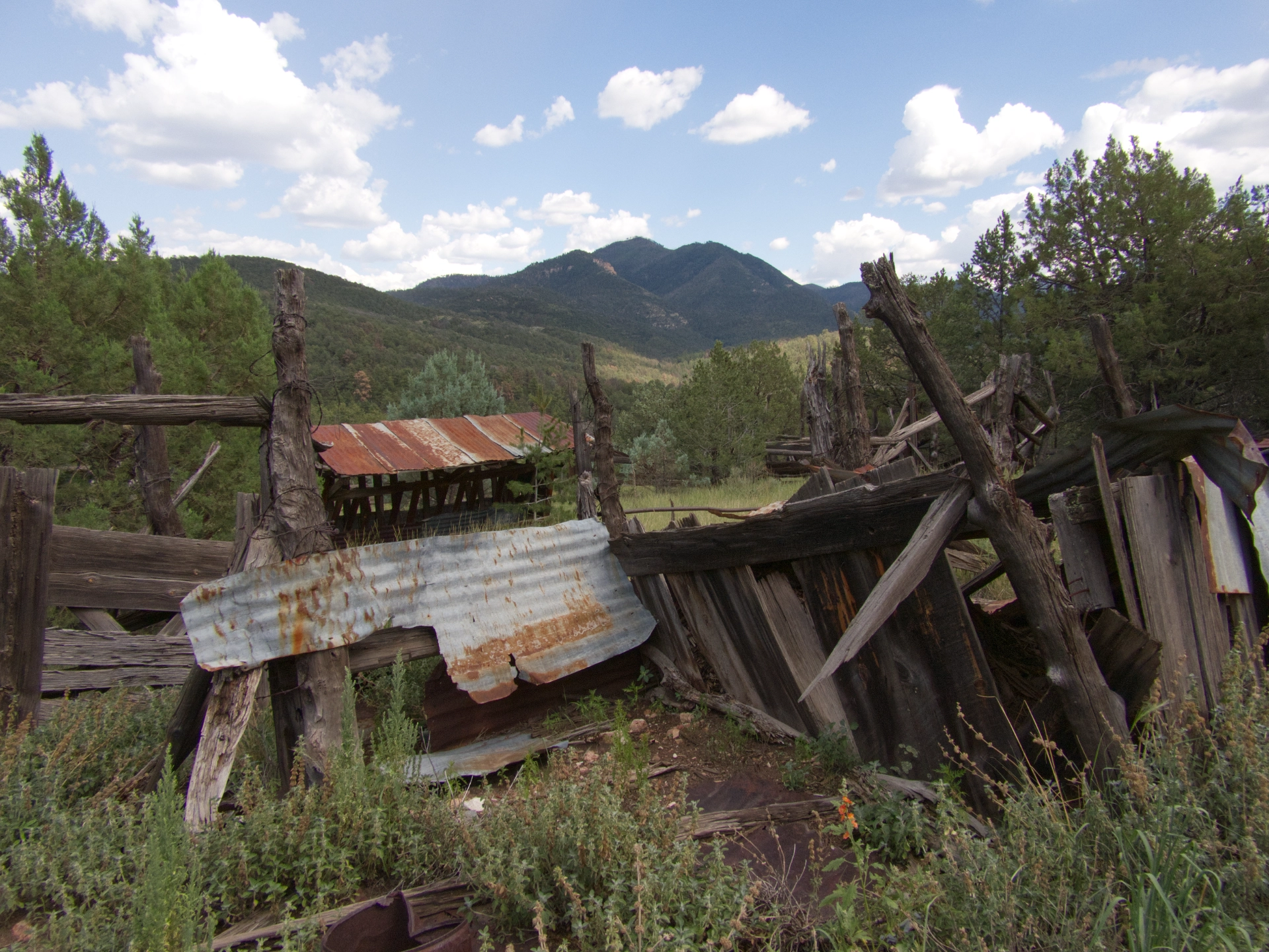
Another building had a cattle chute and might have been a barn or slaughterhouse.
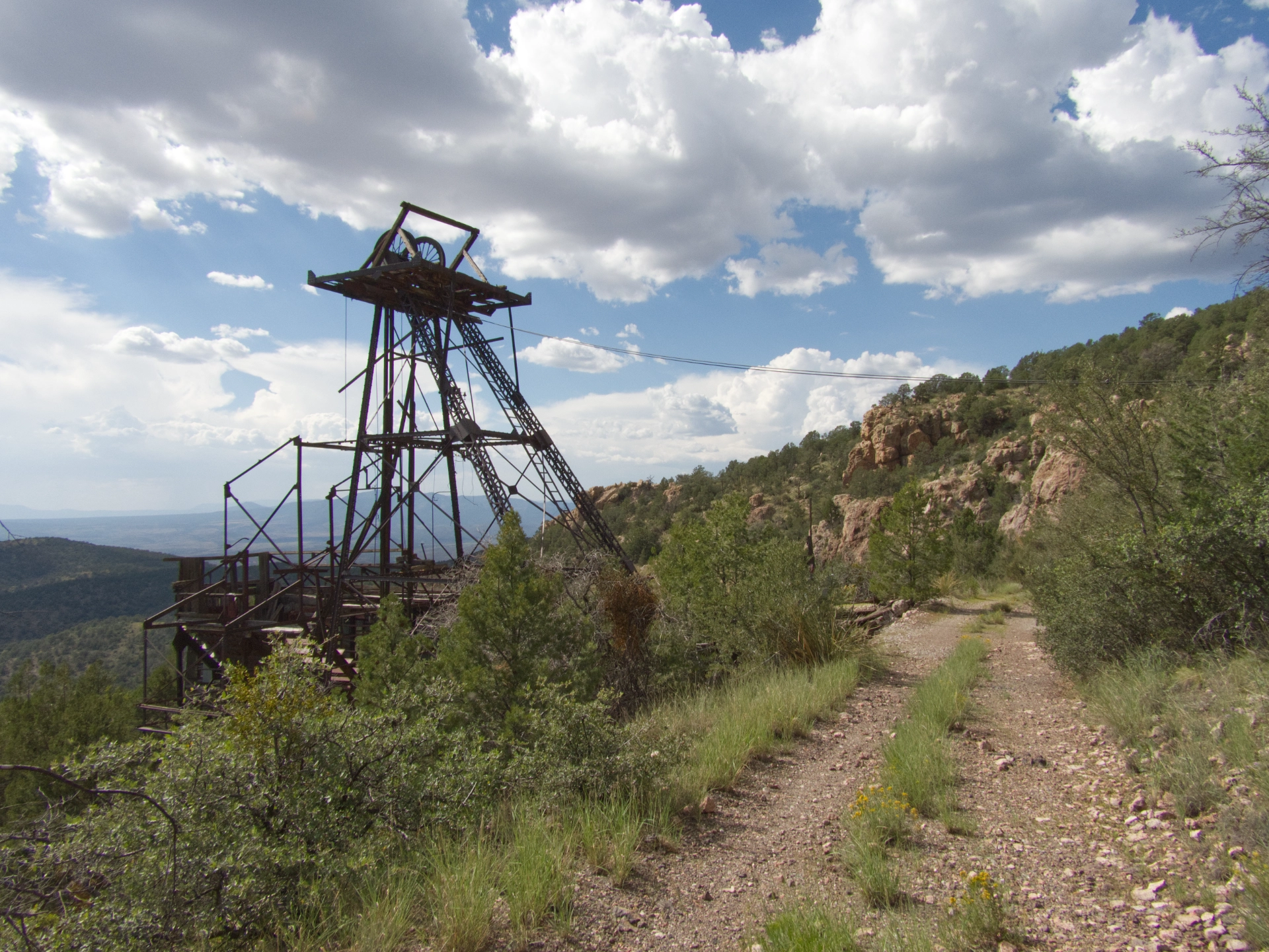
The road reached a high point with dramatic views to the west and then headed downhill to an enormous and remarkably intact headframe.
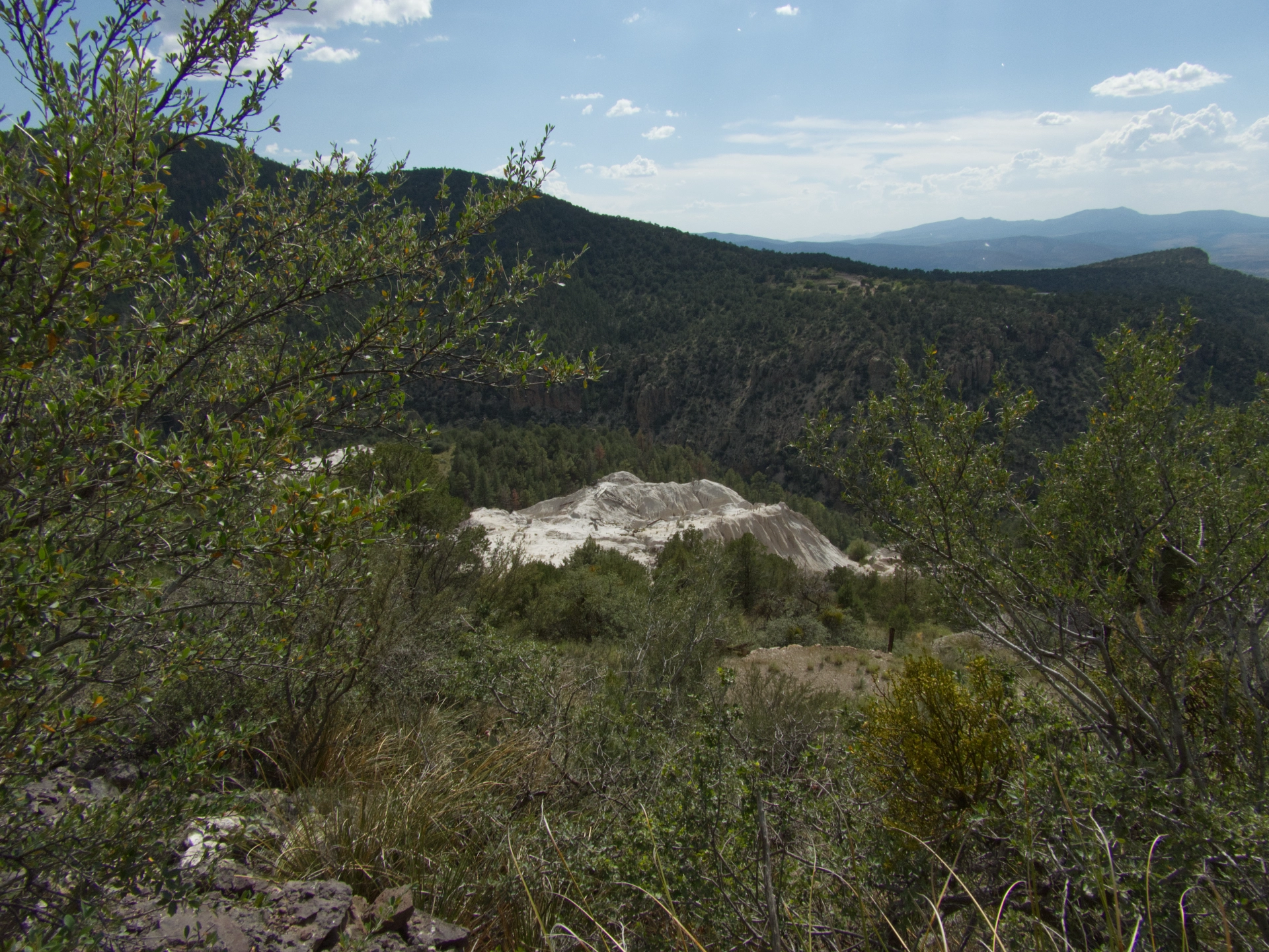
Along the way, we could peer down at the vast chalk-white slurry that dominates the landscape as you drop into Mogollon from Bursum Road.
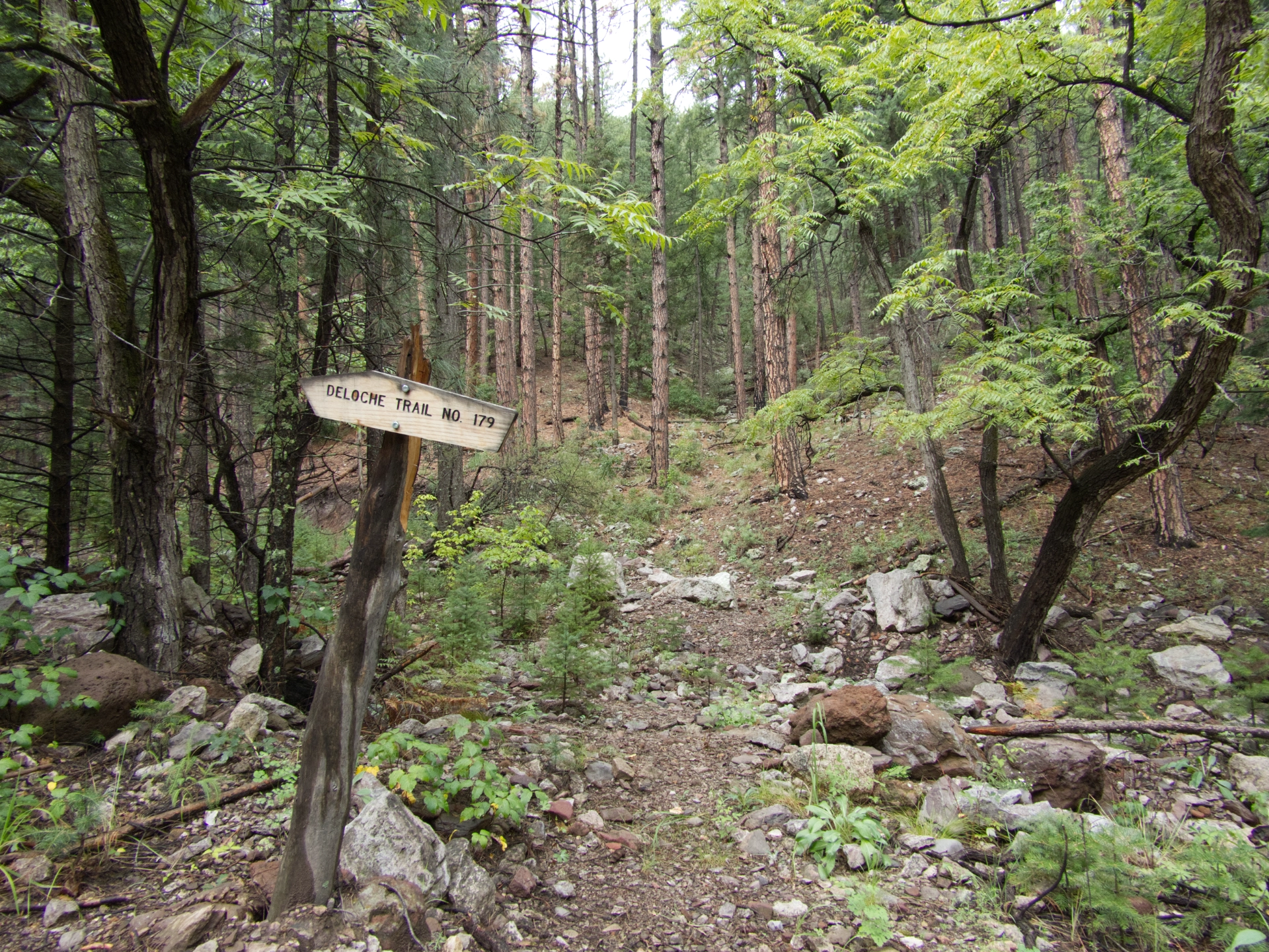
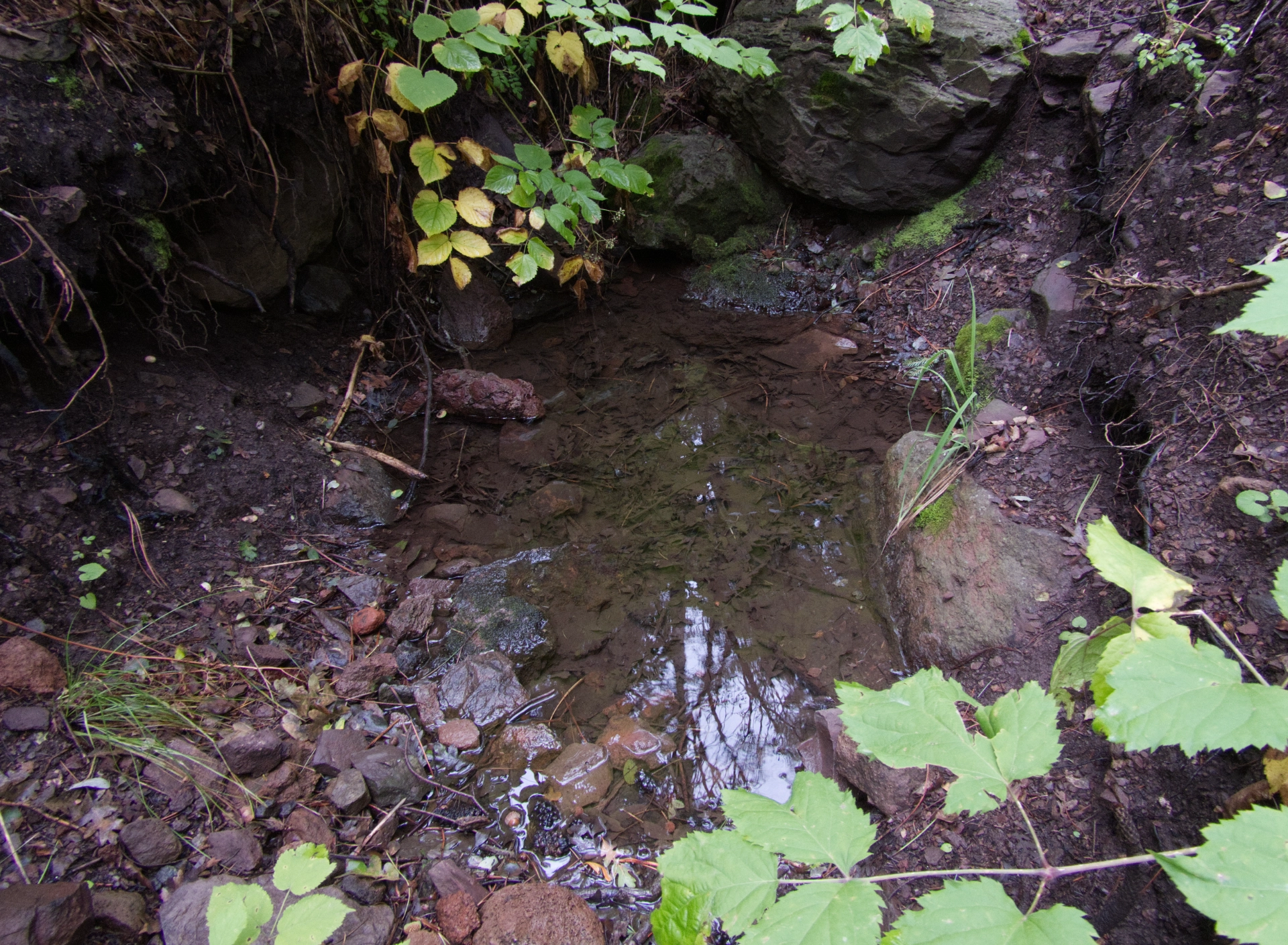
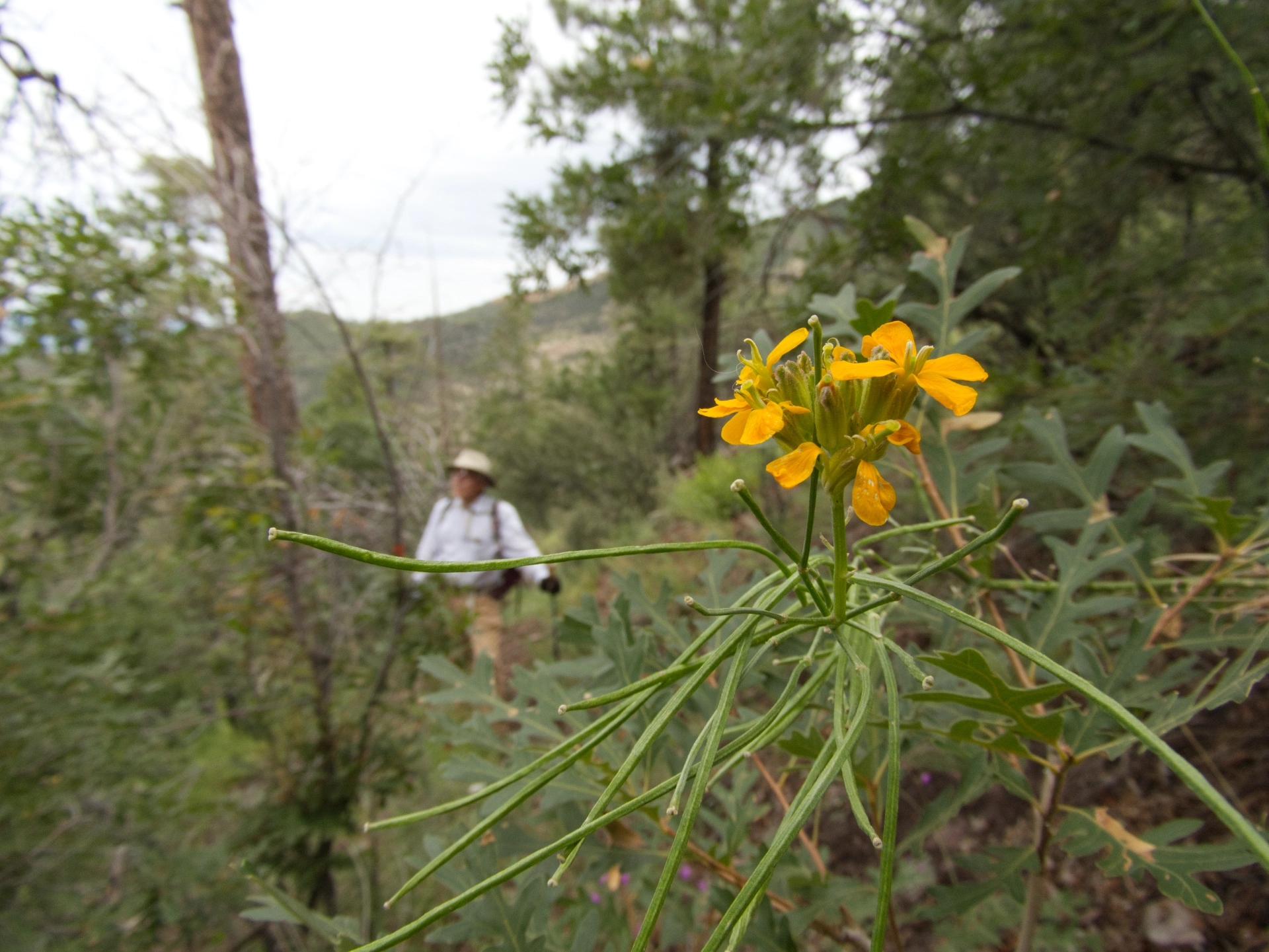
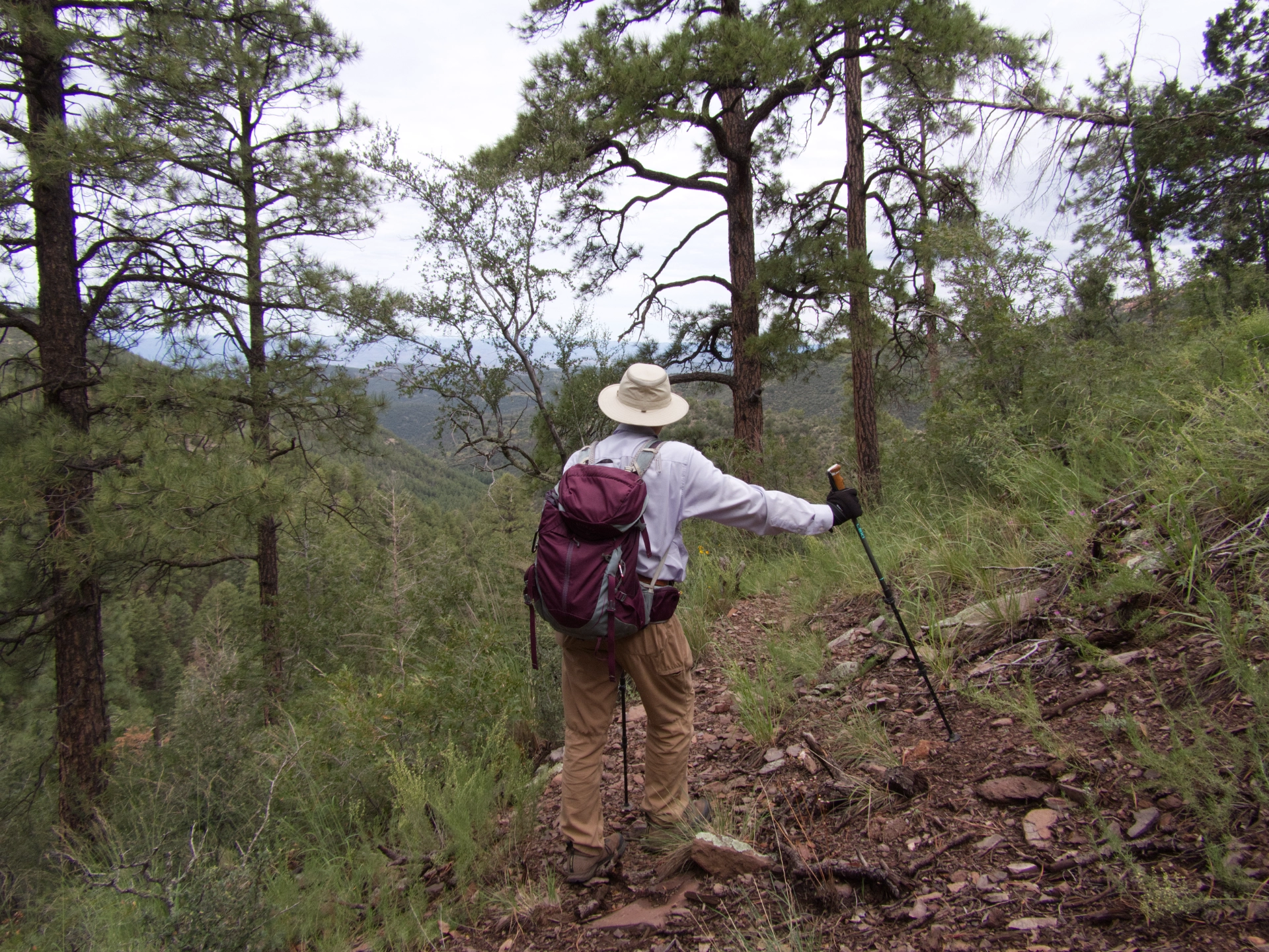
The next morning, as planned, we got up early and headed two miles up Bursum Road to the Deloche Trail. This is an epic trail that continues deep into the Mogollon Mountains, but we'd heard the first two miles were cleared two years ago and led to a saddle with great views. After the previous night's rain, the trail very steep and sticky, with some gnasty gnats. But at least we got some good views before the trail blinked out at about 1.5 miles.
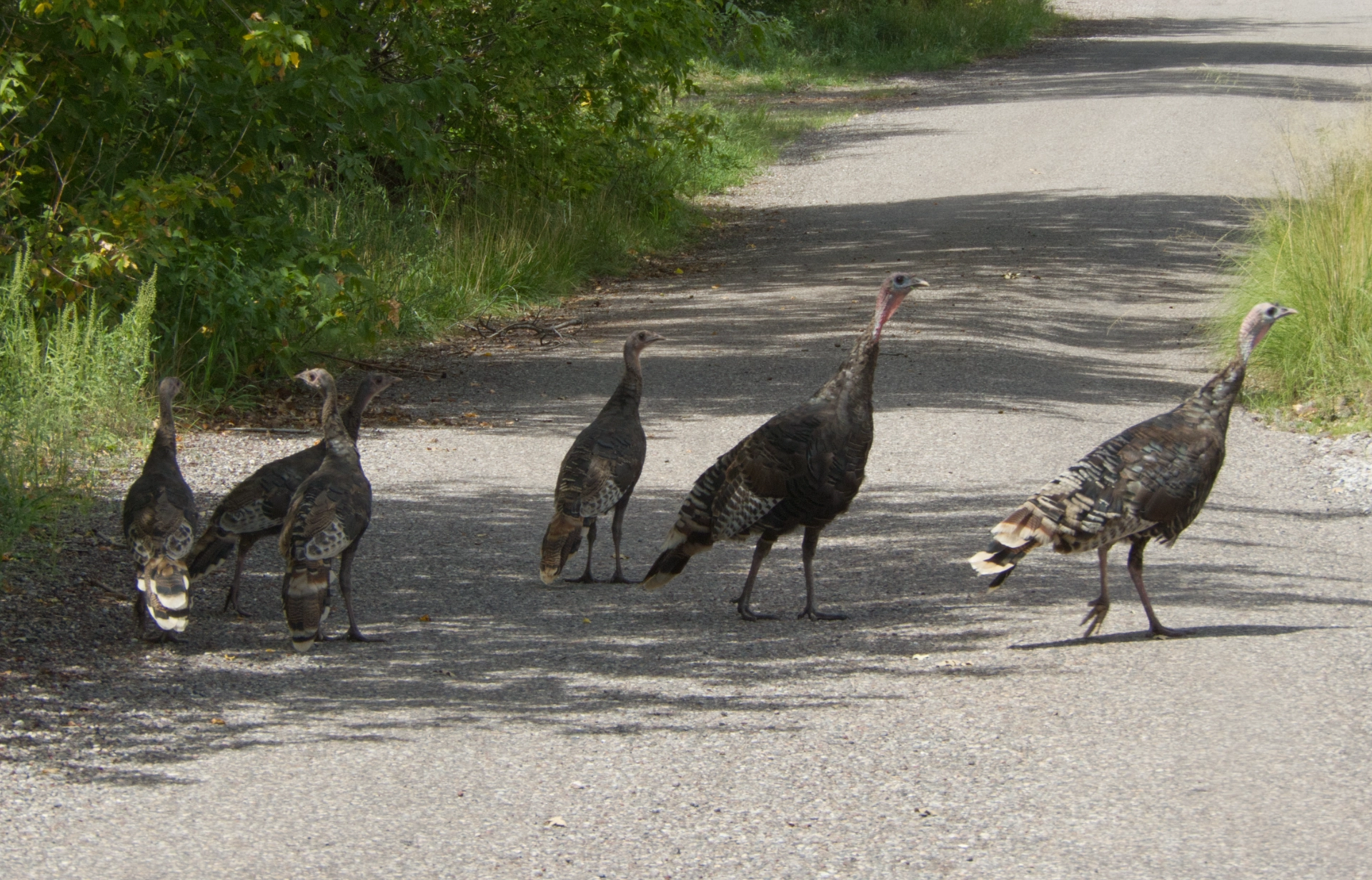
We rewarded ourselves with another great lunch at the Purple Onion, and spent the rest of the afternoon wandering around town, accompanied by a large and rather chill flock of wild turkeys.
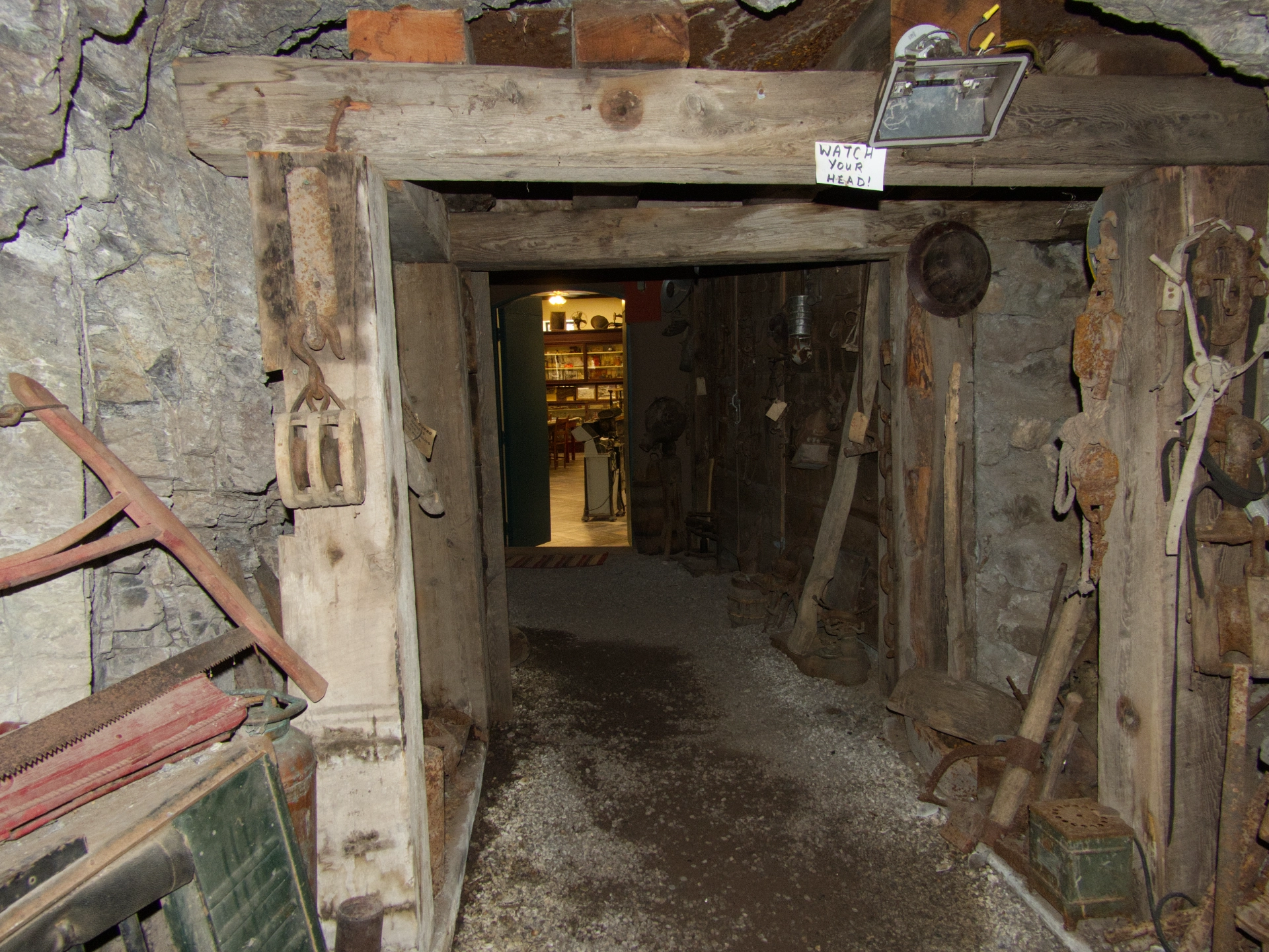
The day's highlight was a visit to the Mogollon Museum, whose best feature is the proprietor and curator Kate Morgan. Kate has lived in Mogollon for 55 years and tended the museum for five, after taking over from her aunt who had retired at age 93. There was no question she could not answer among the many we had accumulated during our brief visit. From her we learned that at its peak, Mogollon had a population of around 8,000. Inhabited miner's cabins, tents, and some caves extended all the way up the hill to the mine. Kate's father worked for Kennecott Copper, and her family often came to Mogollon to go hunting and fishing. She told her father when she was three years old that she wanted to grow up to marry a cowboy and run the Mogollon Museum. I guess she got her wish! But now Kate is ready to retire, trying to sell the museum, and hoping desperately that it won't be "parted out". While perusing old photos, all of which she knew by heart, Kate described how the flood of 2013 had filled the museum with two and a half feet of mud. Luckily, a Danish cabinet maker was able to restore the lovely display cases and even create a new one that was a perfect match.
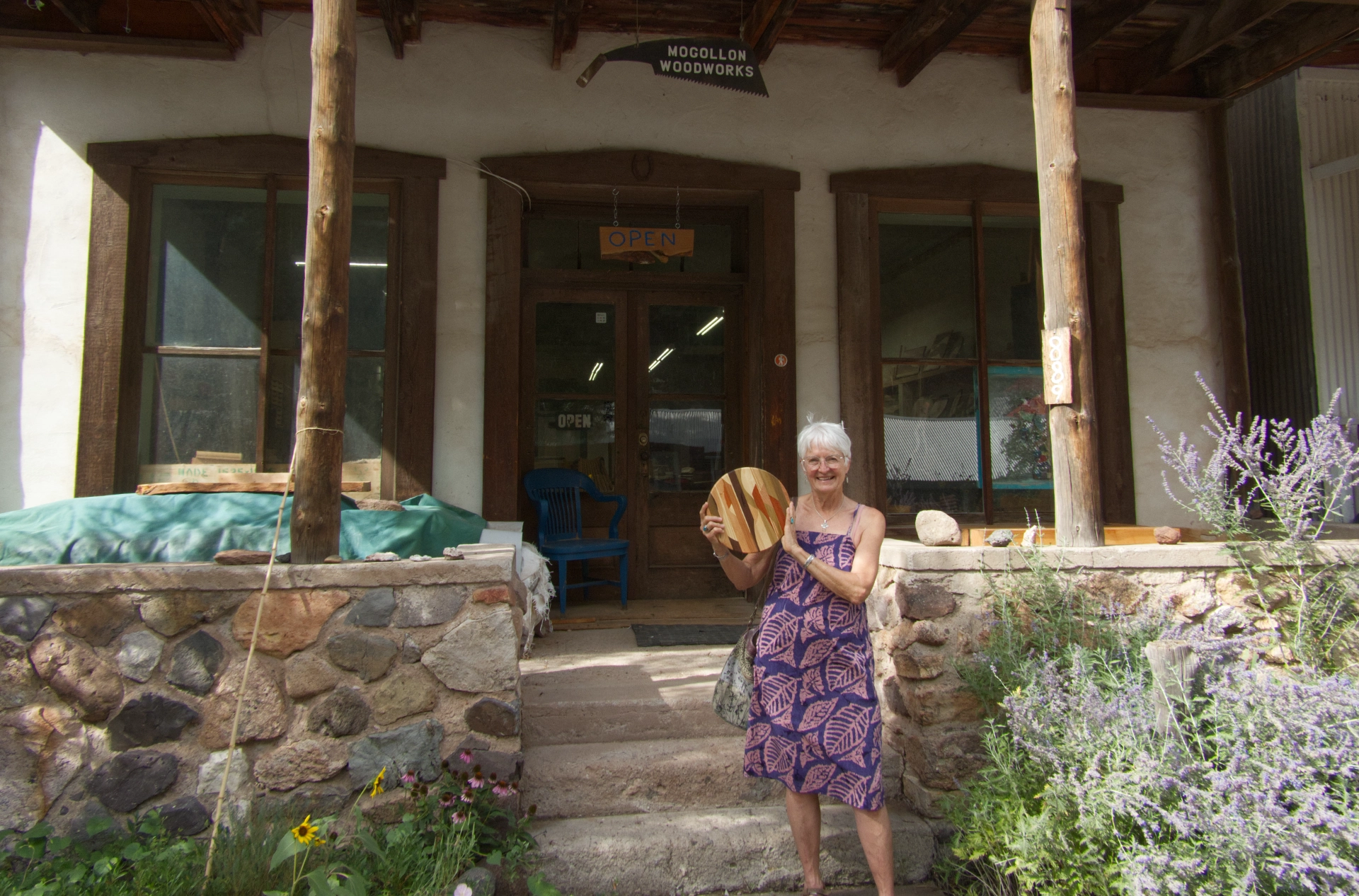
Just up the street, we stumbled upon the Mogollon Woodworks, where we encountered said Danish cabinetmaker. Niels Mandoe has lived and worked in Mogollon for 32 years. These days he limits himself to making exquisite wood-cutting boards, stools, and chairs. We spent a long time talking to him and left with a lovely sample of his work.
It was a short but great visit. We packed a lot into a couple of days, yet it was very relaxing. Maybe we need to go back for another visit before they close for the winter.
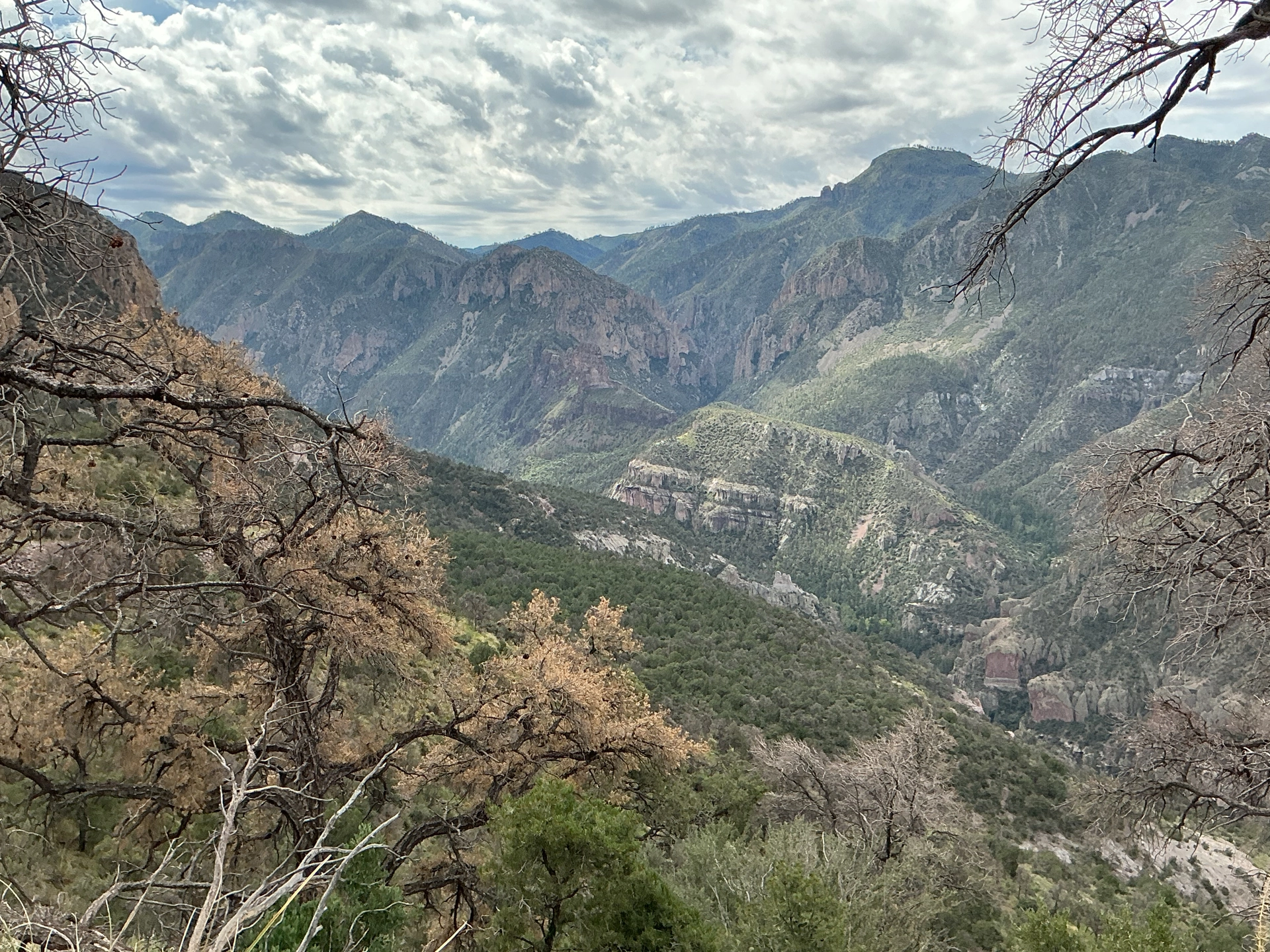
But wait, there's more! On our way out of town, we checked out a couple of side roads. One of them offered jaw-dropping views, one of down into Whitewater Canyon, with the option of a trail down to the old power plant.
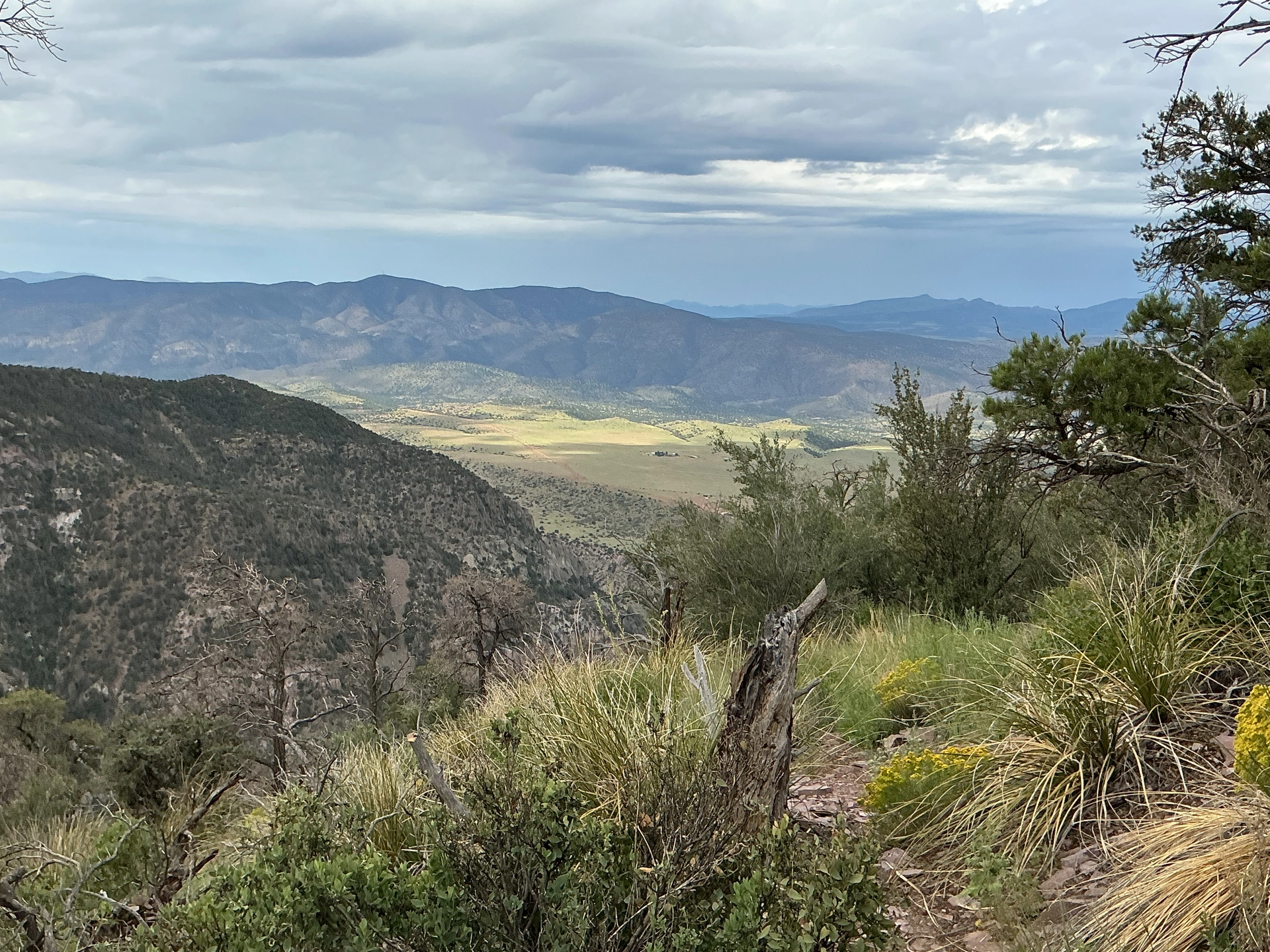
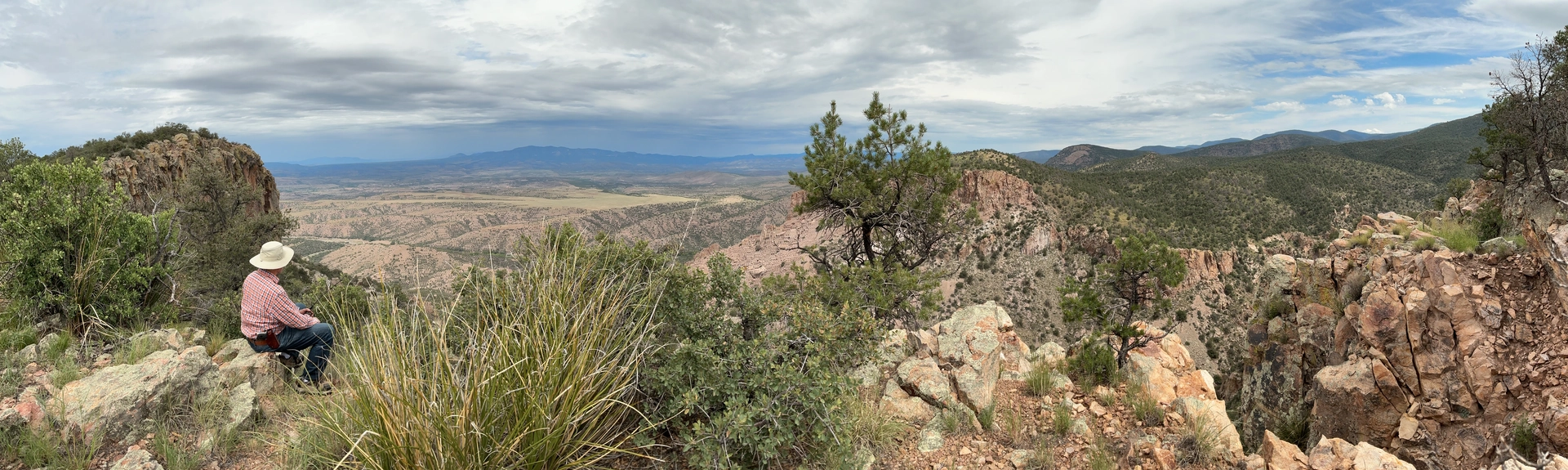
The other ended at a rocky promontory whose sheer cliffs plunge nearly 1000' feet to Silver Creek. Yup, there is more to see and do here, and we must return again soon!
